
Freezing soup is an easy way to save time and money. Make a double batch, portion it into containers, and enjoy a homemade meal in minutes whenever you need it.
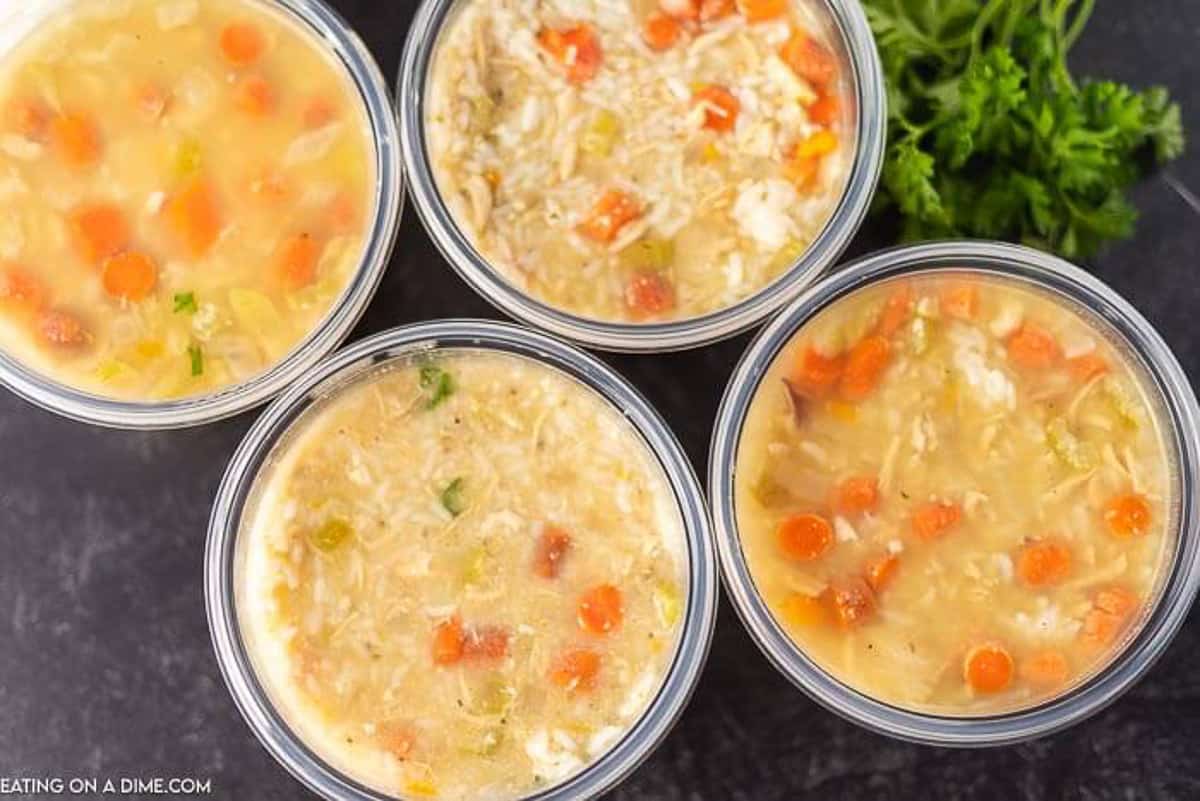
After developing over 150 soup recipes in 14 years of professionally writing recipes I always make a double batch — one pot for dinner tonight and one for the freezer.
In a house with 8 kids having homemade soup waiting in the freezer means a hot healthy dinner is always handled no matter how busy the week gets and at 75% less than store-bought canned soup it is one of the best budget habits I have ever built.
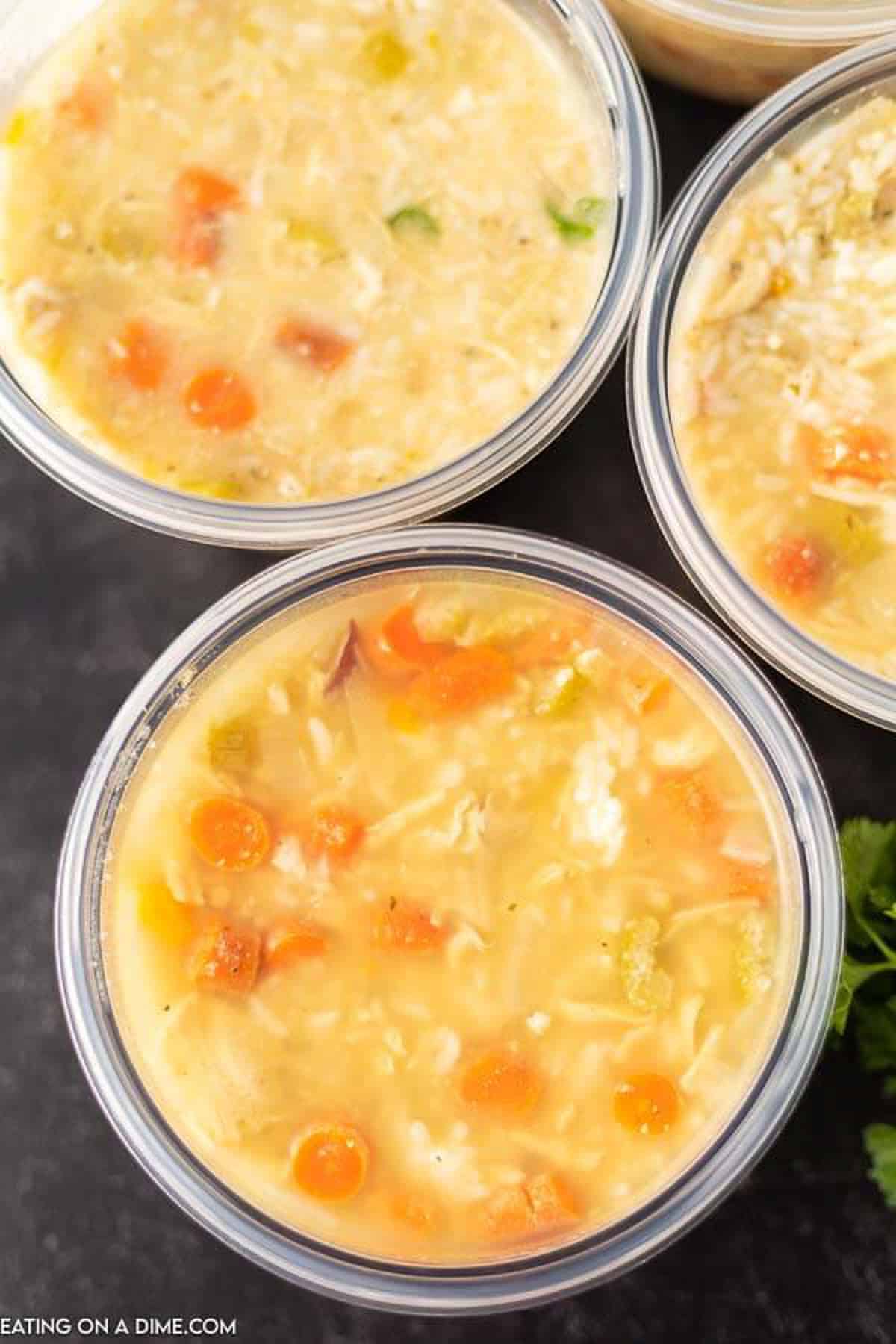
What Soups Freeze Best
Most soups freeze beautifully — here is a quick guide to what works and what needs special handling:
Freeze with confidence:
- Broth-based soups — chicken noodle vegetable minestrone and bean soups all freeze perfectly
- Slow cooker soups — chili taco soup and beef stew freeze and reheat beautifully
- Pureed soups — butternut squash tomato and lentil soups freeze very well
Freeze with caution:
- Cream-based soups — heavy cream and milk-based soups can separate when thawed. Freeze the base without the cream and stir it in fresh when reheating
- Soups with noodles or pasta — noodles absorb liquid and turn mushy when frozen. Freeze the broth and protein separately and cook fresh noodles when serving
- Soups with potatoes — potatoes can become grainy and watery when frozen. Use this trick: freeze the soup without the potatoes and add freshly cooked potatoes when reheating
- Seafood soups — shrimp, fish, and shellfish can turn rubbery and tough after freezing and reheating. Freeze the broth base without the seafood and cook it fresh when reheating for the best texture.
How to Freeze Soup (Step-by-Step)
Step 1 — Cool the soup completely first.
Never put hot soup directly into the freezer — it raises the temperature inside and can partially thaw other frozen items. Cool on the counter for 30 minutes then refrigerate until completely cold before freezing. Spreading it on a rimmed baking sheet speeds up the cooling process significantly.
Step 2 — Choose the right containers.
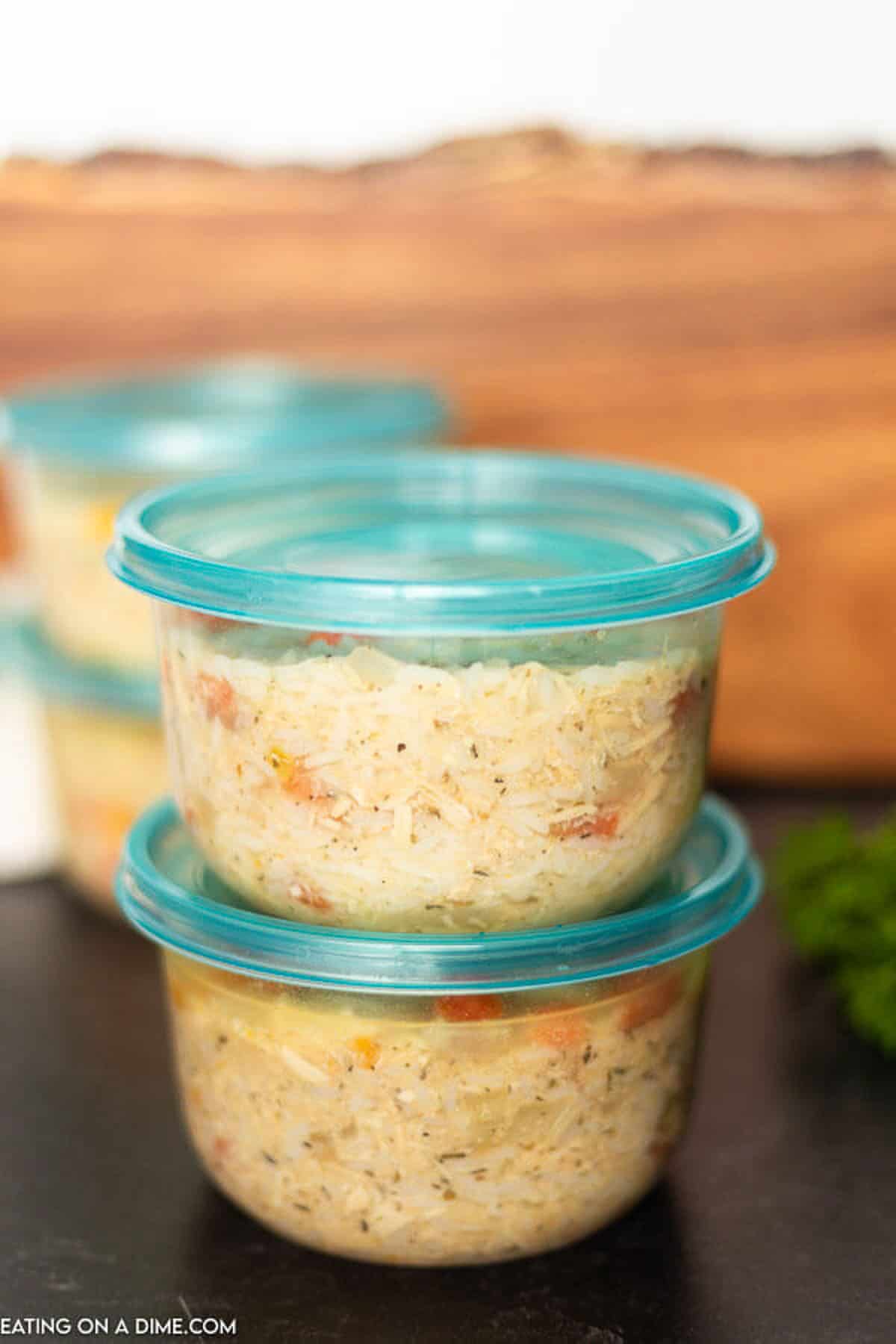
Individual serving containers — 1 to 2 cup portions — are the most practical because you only thaw what you need. Options include:
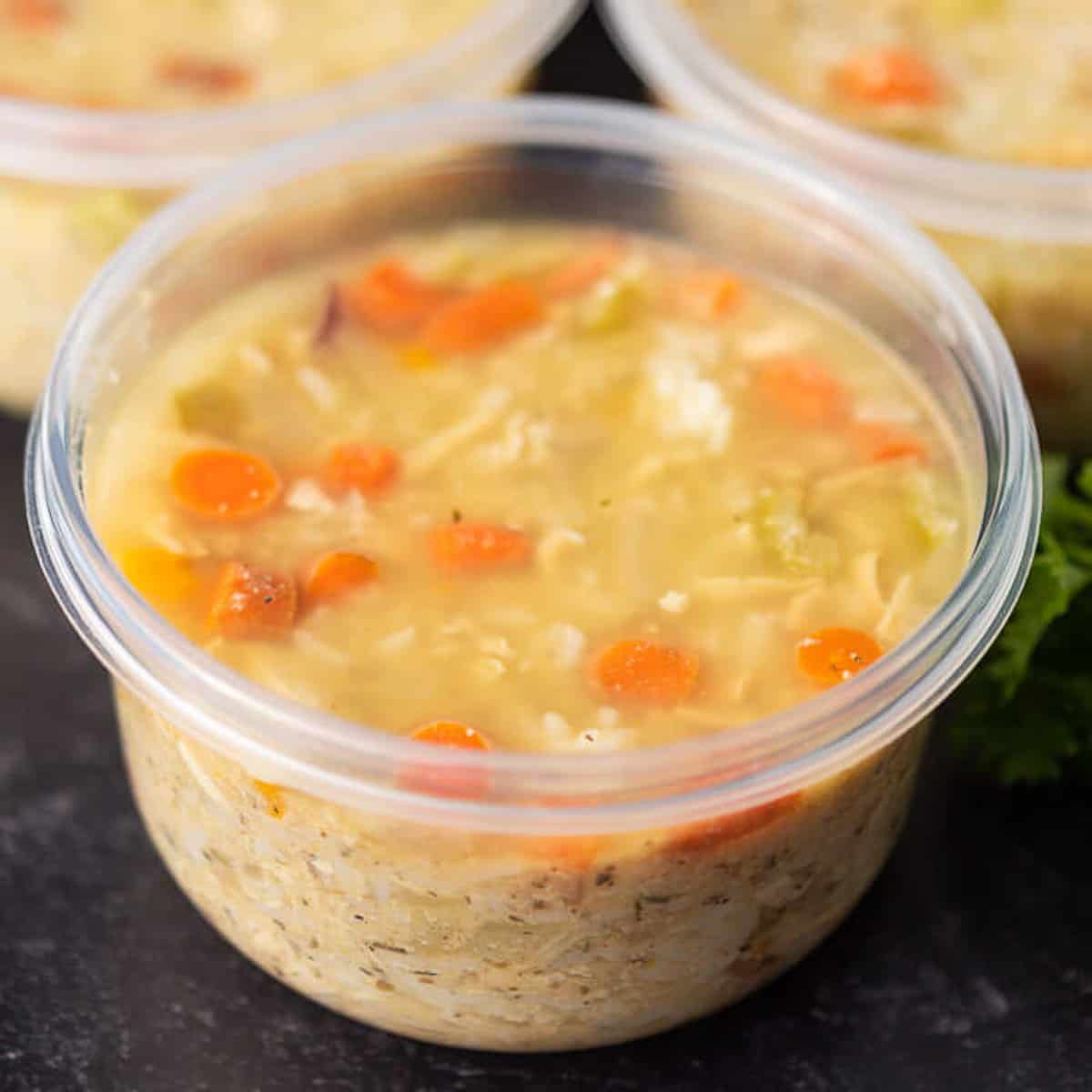
- Freezer-safe plastic containers with tight-fitting lids
- Mason jars — use straight-sided, freezer-safe jars only (not ones with curved shoulders) and leave 1 inch of headspace. Even freezer-safe glass can crack from the temperature swings of freezing and reheating, so cool the soup completely before filling, don’t tighten the lid fully until frozen, and handle gently once frozen.
- Quart or gallon freezer bags — press flat to remove air and stack easily in the freezer
- Silicone soup cubes — freeze in portions then transfer to a bag
Step 3 — Label every container.
Always write the recipe name and the date on the container before freezing. Frozen soup all looks the same after a few weeks and an unlabeled container is a mystery no one wants to solve at dinnertime.
Step 4 — Leave headspace.
Soup expands as it freezes — always leave at least 1 inch of space at the top of any container or jar to prevent cracking or splitting.
Step 5 — Freeze flat when possible.
Freezer bags laid flat stack much more efficiently than containers and thaw faster. Once fully frozen stand them upright like files for easy organization.
Step 6 — Use within 3 months.
Most soups keep well for up to 3 months in the freezer. After that the quality starts to decline even if it is still safe to eat.
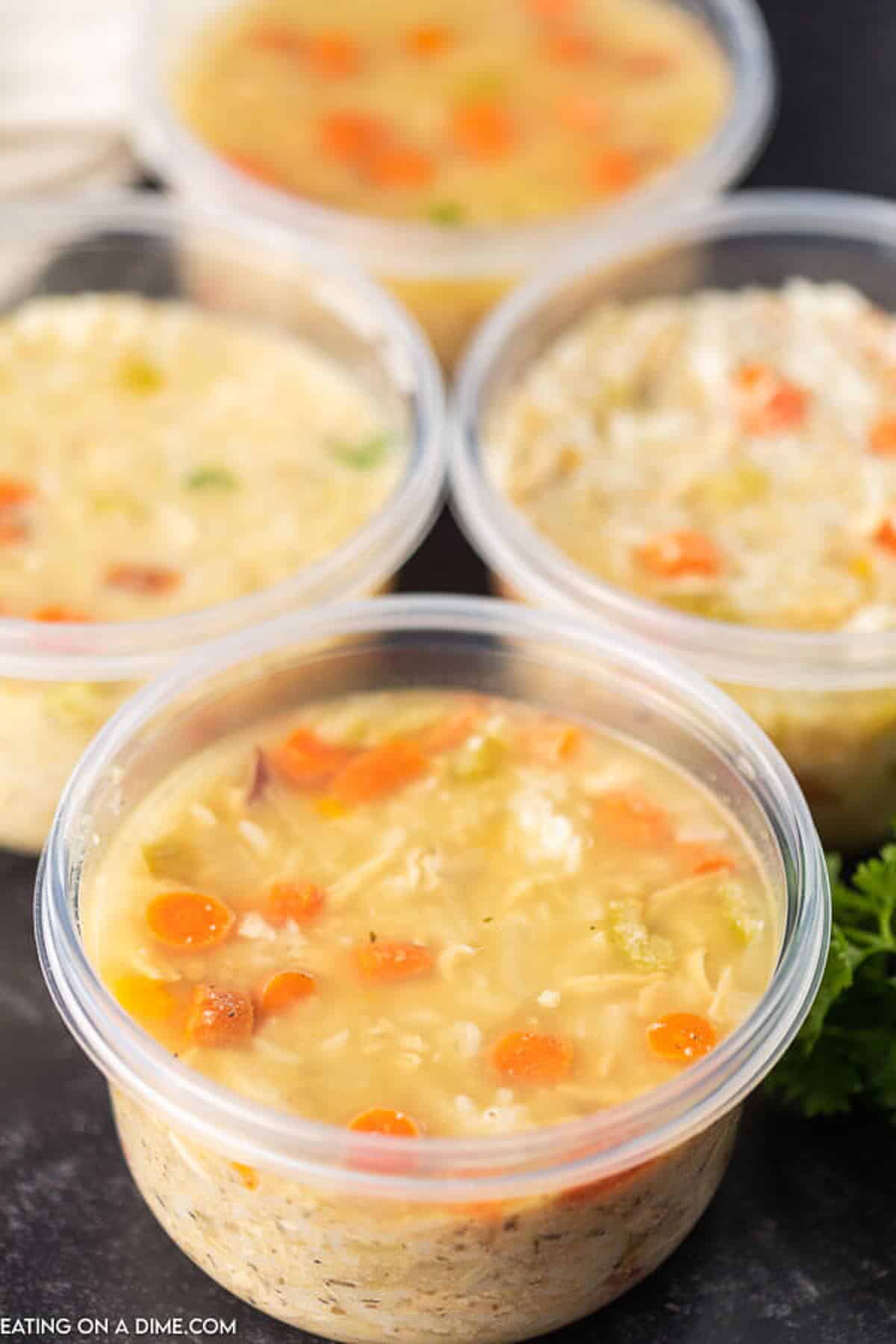
How to Thaw and Reheat Soup
Overnight refrigerator method — best result
Move the frozen soup from the freezer to the refrigerator the night before you need it. By dinnertime it is fully thawed and ready to reheat on the stovetop in about 10 minutes. This is the most hands-off method and gives the best texture.
Cold water method — faster
Place the sealed freezer bag or container in a bowl of cold water. Change the water every 30 minutes until thawed — usually 1 to 2 hours depending on the portion size.
Stovetop from frozen — emergency method
Place the frozen soup directly in a pot over medium-low heat. Cover and heat stirring occasionally as it thaws — add a splash of broth if needed to prevent sticking. This takes 20–30 minutes but works perfectly when you forgot to thaw ahead.
What to do with cream-based soups
If you froze the soup base without the cream stir in fresh cream or milk after reheating and simmer for 2–3 minutes until incorporated. Always reheat cream soups over medium-low heat — high heat causes the dairy to separate.
What to do with noodle soups
Reheat the broth base on the stovetop and cook fresh noodles directly in the hot broth for the last 8–10 minutes of reheating. This takes slightly longer but gives you perfectly cooked noodles instead of mushy ones.
Tips for Freezing Soup Successfully
- Always double the recipe. Every time you make soup double the batch — one pot for dinner and one for the freezer. This is the single most time-saving habit you can build and it costs almost nothing extra
- Cool completely before freezing. Hot soup in the freezer creates ice crystals that damage the texture and raises the temperature for surrounding frozen items
- Individual portions are more useful than one large batch. A single serving container means lunch or dinner for one without thawing the entire batch
- Use a crockpot liner for zero cleanup. If you make soup in the slow cooker a liner means no scrubbing — just lift and toss after serving
- Use freezer bags laid flat. Flat bags stack efficiently and thaw significantly faster than containers — store standing upright once fully frozen for easy organization
- Add fresh herbs and dairy after reheating. Fresh parsley cream and sour cream all hold up better when added right before serving rather than frozen with the soup
Frequently Asked Questions
It is better to freeze the broth base without the noodles — noodles absorb liquid and turn mushy when frozen and thawed. Cook fresh noodles directly in the reheated broth for the best result.
Most soups keep well in the freezer for up to 3 months — after that the quality starts to decline even if the soup is still technically safe to eat.
Freeze the soup base without the cream — dairy separates when frozen. Stir fresh cream or milk in after reheating and simmer briefly until incorporated.
Yes — always leave at least 1 inch of headspace at the top since soup expands as it freezes. Wide mouth mason jars work best and are easier to fill and empty.
Place the sealed container in a bowl of cold water and change the water every 30 minutes — most individual portions thaw in 1 to 2 hours using this method.
Potatoes become grainy and watery when frozen. Freeze the broth base without the potatoes and add freshly cooked potatoes when reheating for the best texture.
Freezing soup has saved our family countless weeknight dinners — a few minutes of portioning after dinner means a hot homemade meal is always waiting in the freezer when life gets busy.
Our Favorite Soups to Freeze



How to Freeze Soup
Ingredients
- 1 cup Soup
See how we calculate recipe costs.
Instructions
- Let the soup cool completely before freezing.
- Label the container with the recipe name and date.
- Pour the soup into freezer-safe containers or freezer bags, leaving at least 1 inch of headspace for expansion.
- Remove as much air as possible from the containers or bags.
- Seal and store in the freezer for up to 3 months.
- To defrost, place in the refrigerator for 1-2 days, or place the sealed container in a bowl of cold water. Reheat on the stovetop or in the microwave.

This was a great idea and it tasted great even after being frozen. I will be doing this much more often after seeing how great the taste was.
5 star
Great tips! I love freezing soups for easy lunches!
Great tips!
Didn’t know you could do this and now it saves me so much soup for later! Love it!