
This Blueberry Jam is made with just 4 simple ingredients and no pectin — fresh blueberries, sugar, lemon juice, and salt cooked down into a thick rich homemade jam for just $0.26 a serving.
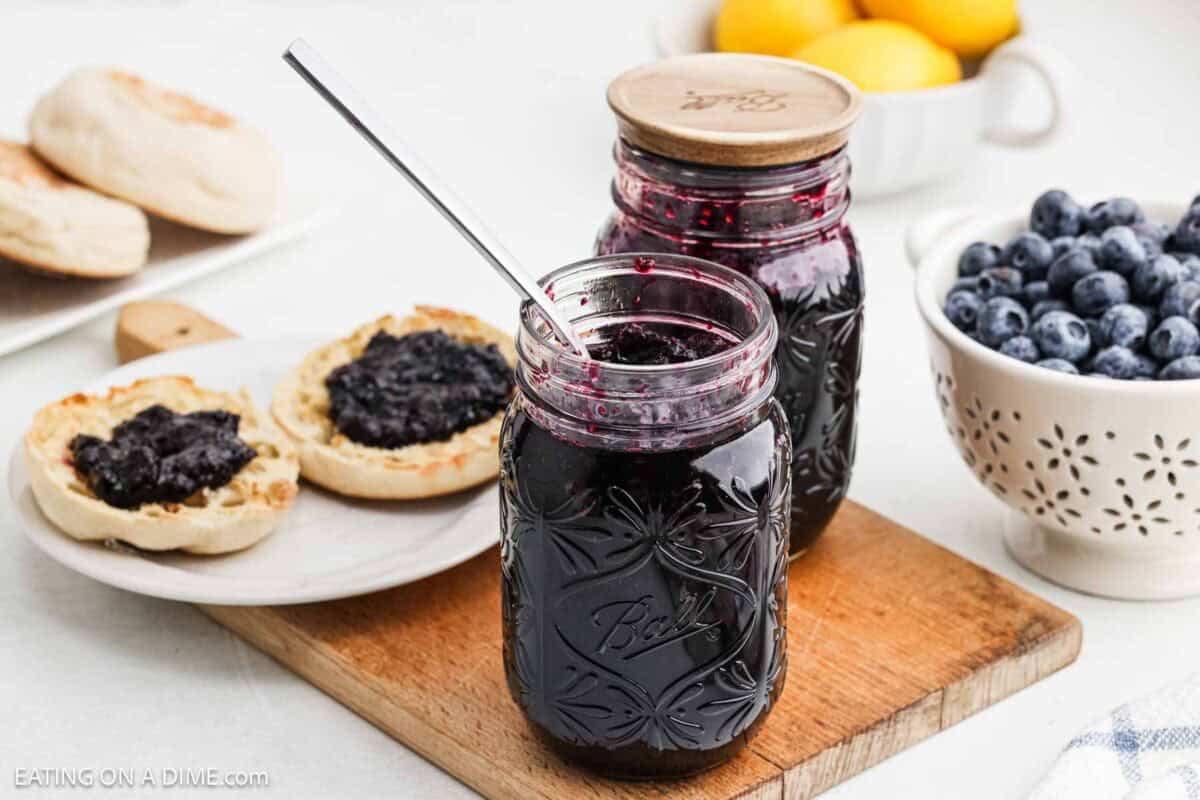
After 14 years of developing recipes, I know homemade jam only sounds complicated until you make it. This blueberry jam is simple, costs just $0.26 per serving, and disappears quickly on toast, pancakes, and vanilla ice cream.
Why You’ll Love This Recipe!

- No pectin required — the natural pectin in blueberries combined with lemon juice does all the work
- Only 4 ingredients — fresh blueberries sugar lemon juice and salt
- Ready in under 30 minutes from start to finish
- Thick rich and full of real blueberry flavor
- Perfect for gifting — pour into mason jars and give as a homemade gift that costs almost nothing
If you love easy homemade preserves and spreads like this one you will also love our Raspberry Freezer Jam, Christmas Jam, and Bacon Jam. They are all budget-friendly, made with simple fresh ingredients, and so much better than anything from a store shelf.
Why No Pectin is Needed?
Most jam recipes use pectin to help them thicken quickly. This recipe does not need it because blueberries naturally contain pectin, and the lemon juice helps activate it during cooking. Cook the jam to 218 to 220°F so the natural sugars and pectin create a thick, spreadable consistency.
No canning equipment required
This recipe skips the water-bath canning process entirely — no canner, jar tongs, or special equipment needed. That means it’s simpler and faster than traditional canned jam, but it does need to be stored in the refrigerator or freezer rather than on the pantry shelf.
Ingredients
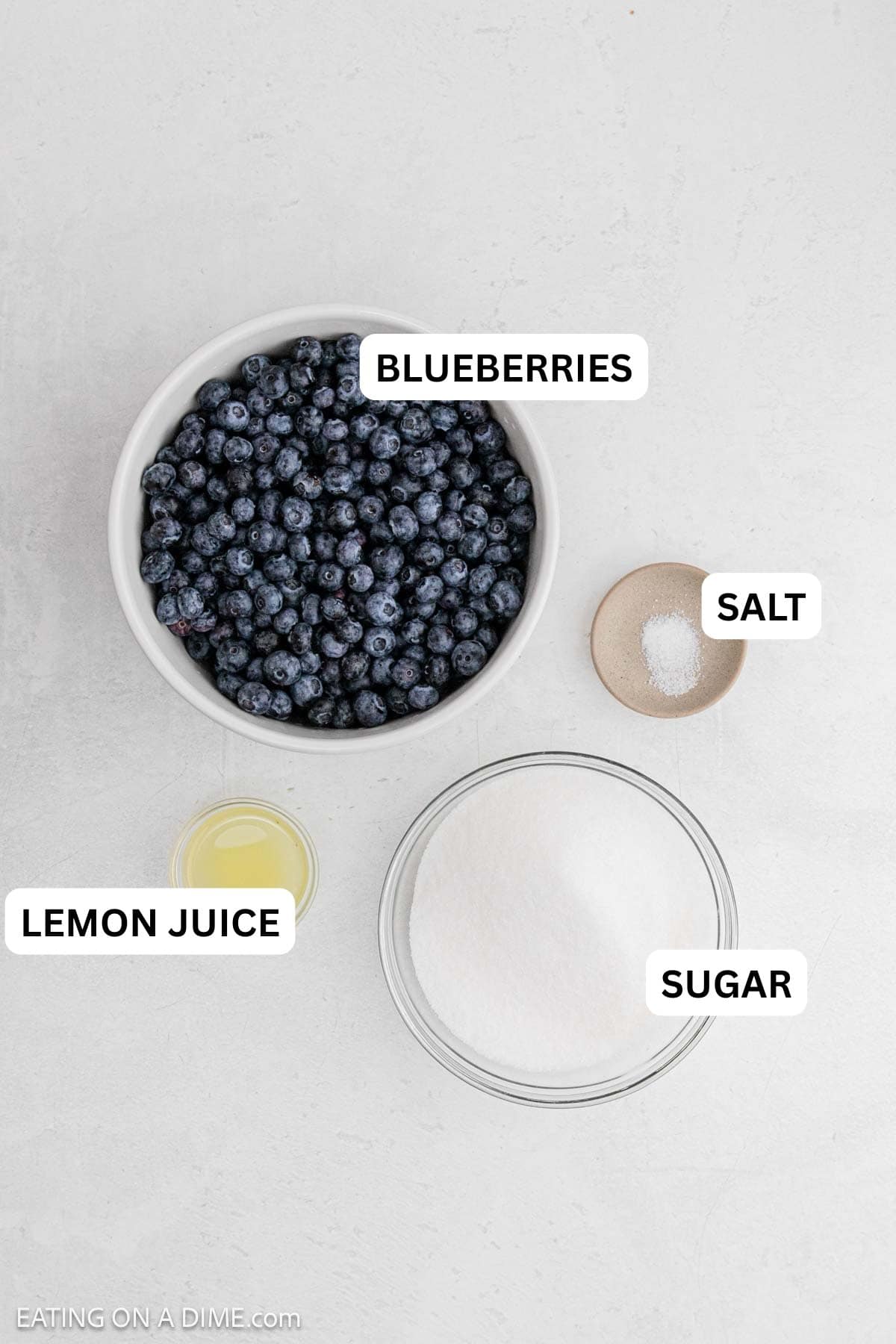
- Fresh blueberries — rinsed and patted dry before cooking. Fresh blueberries give the best flavor and color. Frozen blueberries work as a substitute — thaw and drain completely before using to remove excess moisture
- Granulated sugar — sweetens the jam and helps it set. For a less sweet result reduce to 1¾ cups. Do not reduce further or the jam may not set properly
- Fresh lemon juice — always use freshly squeezed. The lemon juice activates the natural pectin in the blueberries and helps the jam set while adding a subtle brightness that balances the sweetness. Bottled lemon juice works in a pinch but fresh is noticeably better
- Salt — a small amount that balances the sweetness and enhances the blueberry flavor without making the jam taste salty
Carrie’s Tip: The best way to test if your jam is ready without a thermometer is the cold plate test — put a small plate in the freezer before you start cooking. When you think the jam is done drop a small spoonful onto the cold plate and wait 30 seconds. Push it with your finger — if it wrinkles and holds its shape it is ready. If it runs it needs more time.
How to Make Blueberry Jam
Step 1 – Rinse fresh blueberries and pat them dry.
Step 2 – Add fresh blueberries, granulated sugar, freshly squeezed lemon juice, and salt to a large 5-quart pot.
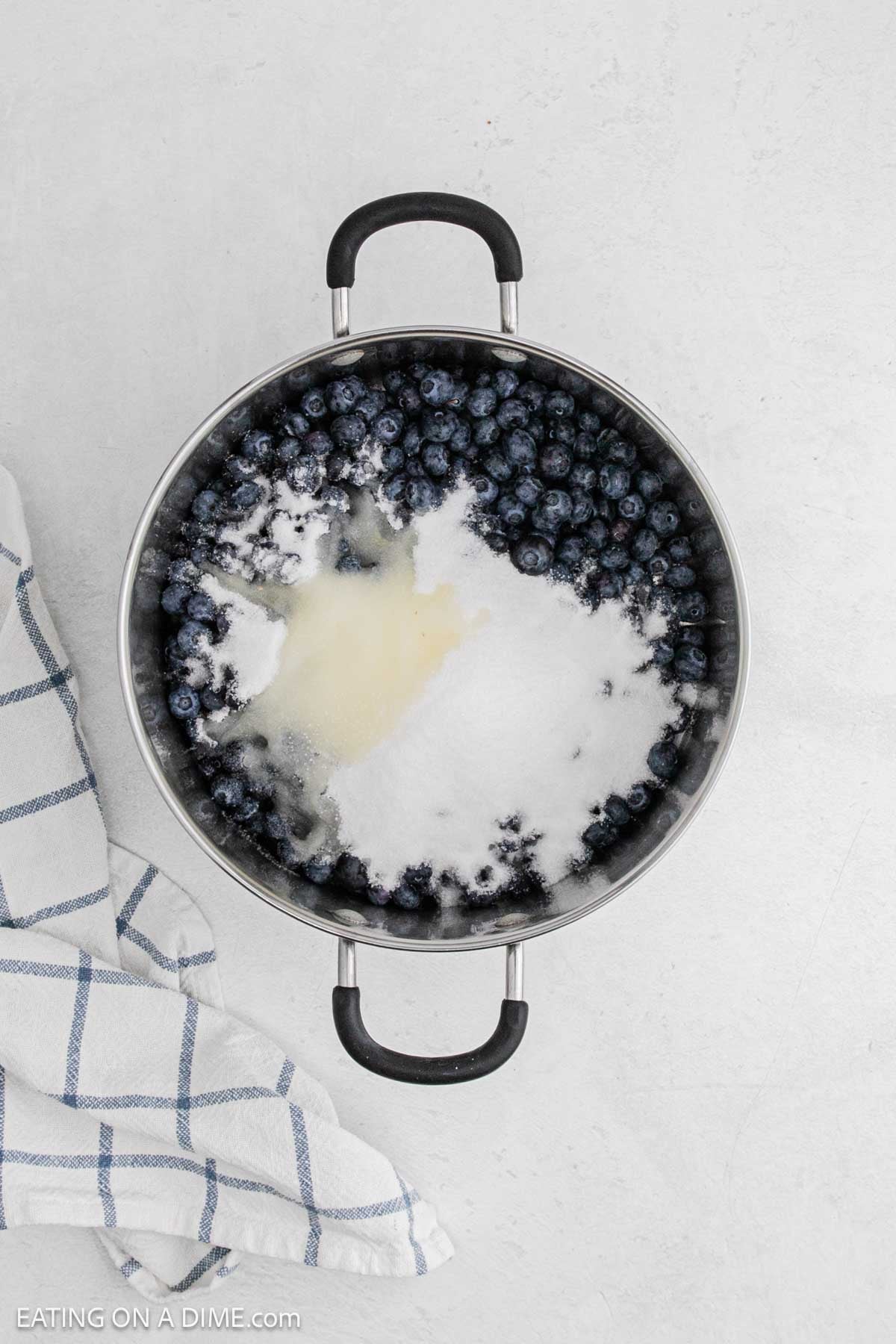
Step 3 – Cook over medium heat for 5–7 minutes, stirring often, until the blueberries begin to burst and the sugar dissolves.
Step 4 – Gently mash about half of the blueberries with a potato masher, leaving some whole for texture.
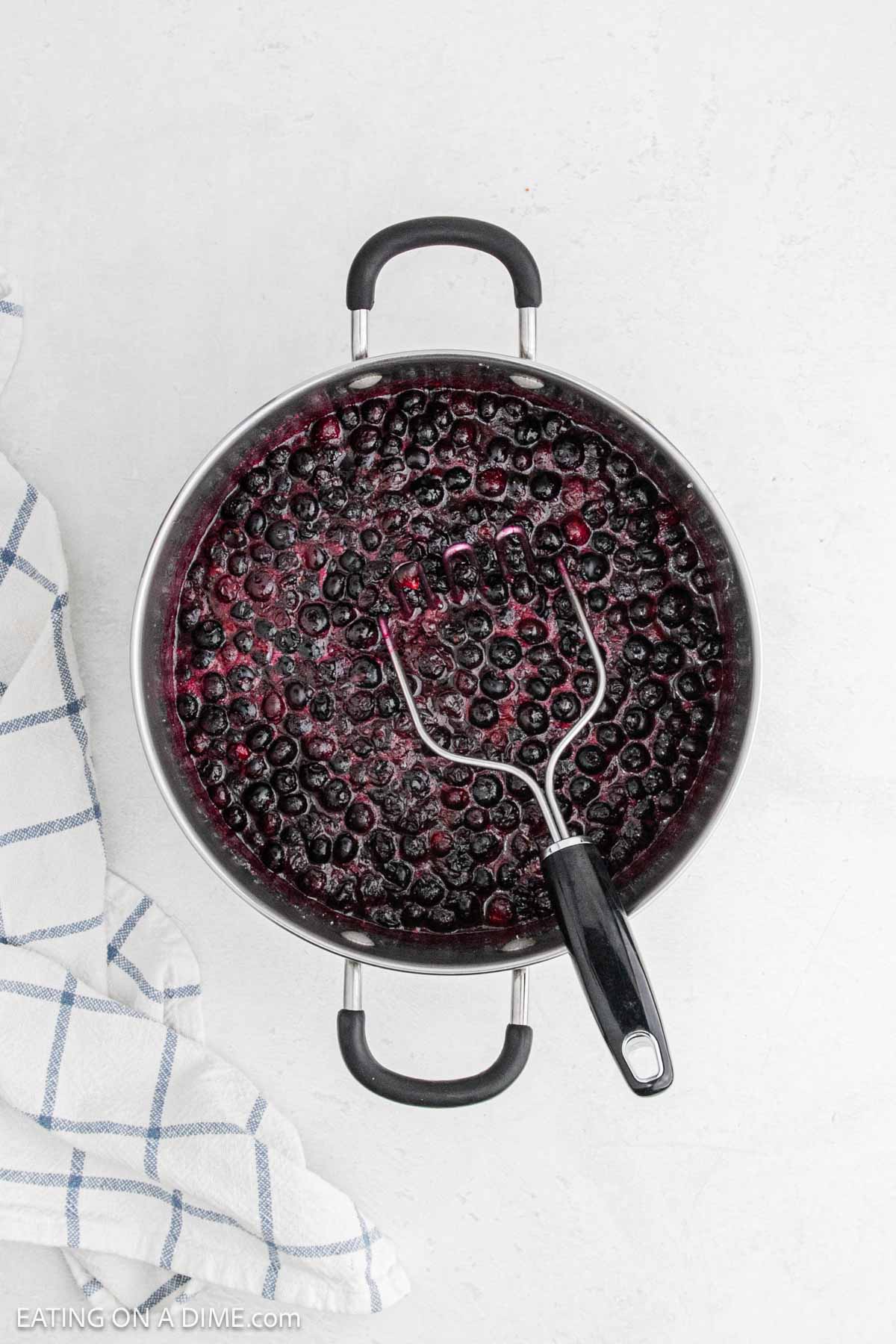
Step 5 – Increase the heat to medium-high and bring the mixture to a steady boil. Stir frequently.
Step 6 – Cook for 15–20 minutes, stirring often, until the jam thickens and reaches 218–220°F.
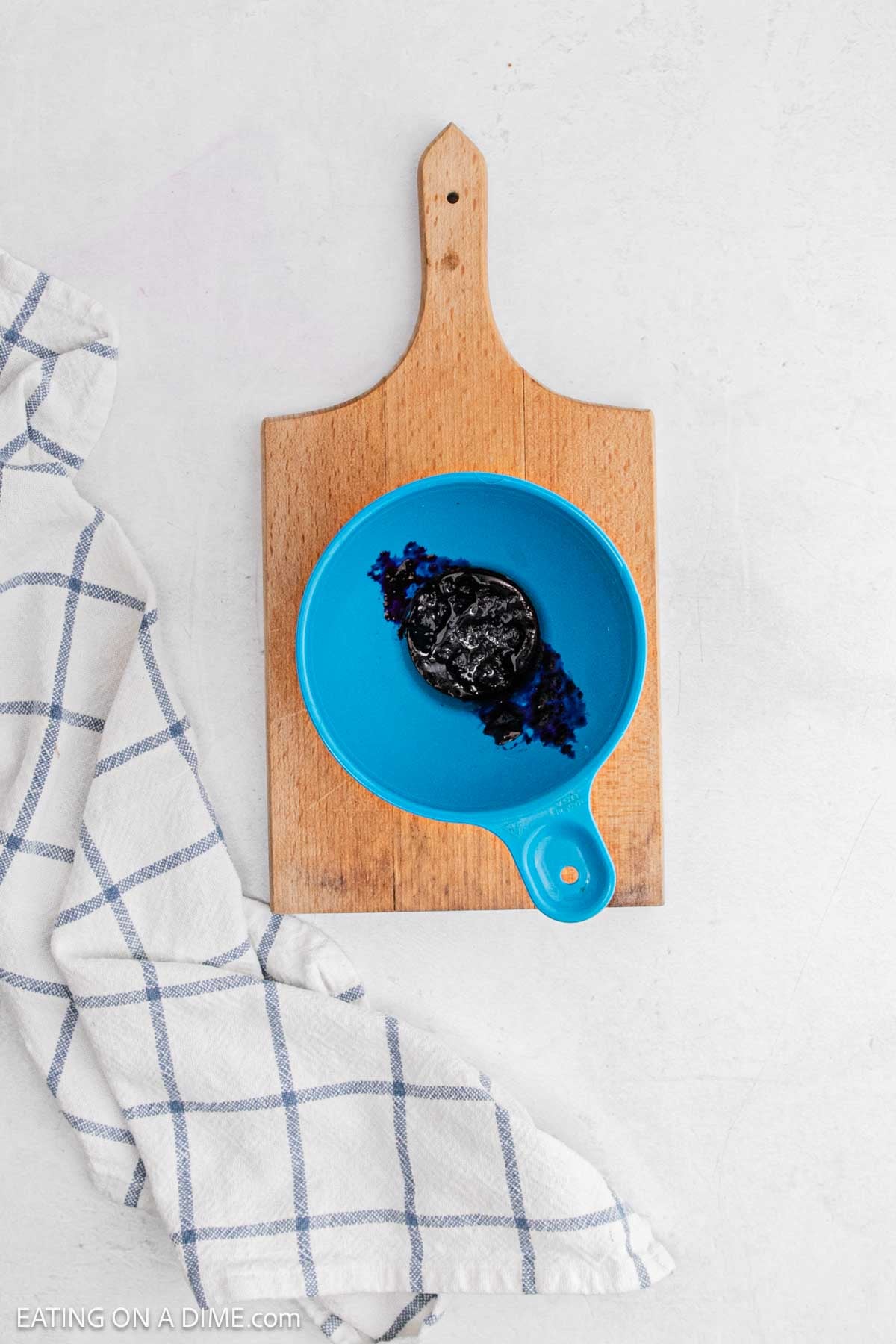
Step 7 – Carefully pour the hot jam into sterilized mason jars.
Step 8 – Let the jars cool completely, then refrigerate overnight before serving.
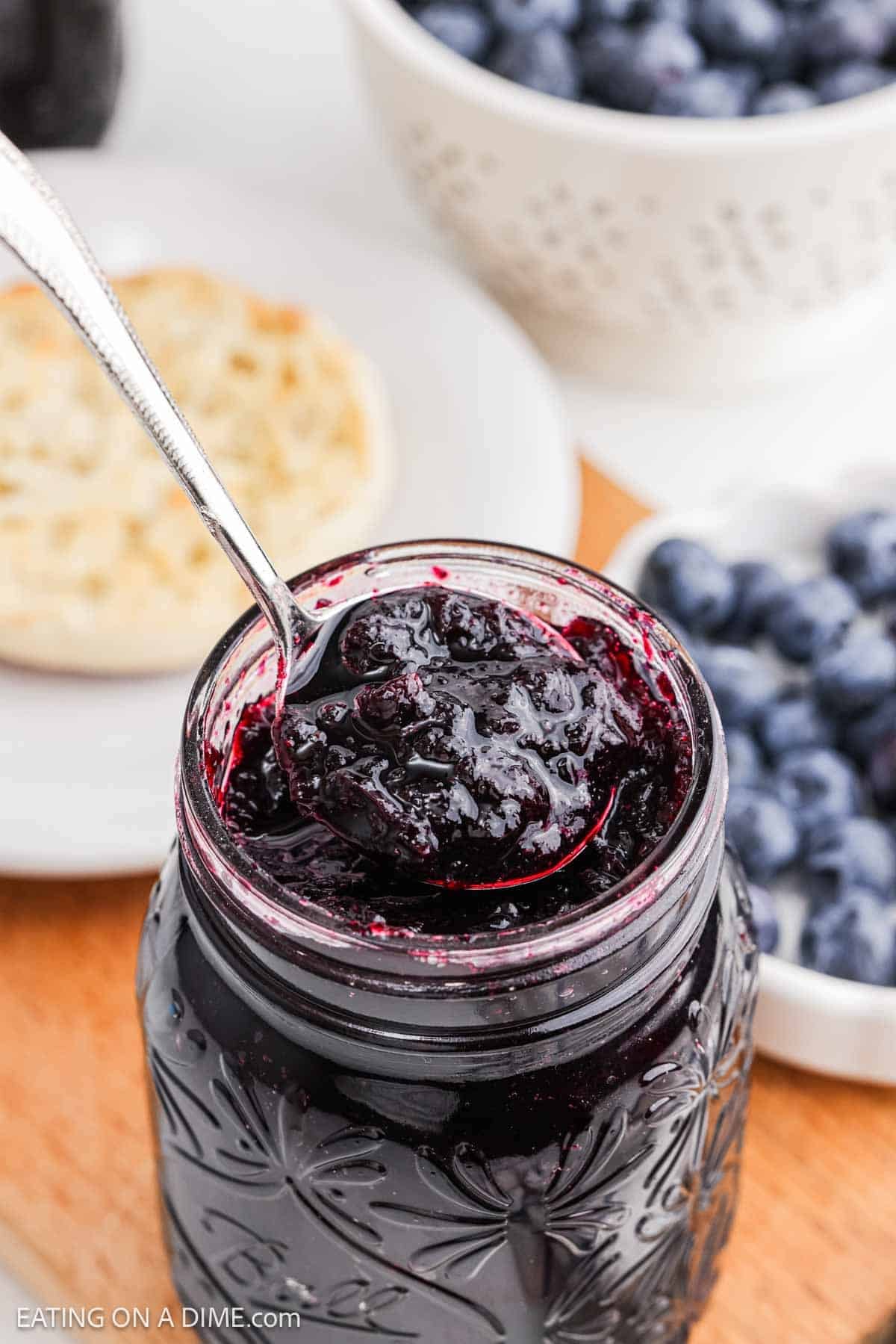
Tips for Success
- Use a large pot. The jam bubbles up significantly as it boils — a 5-quart pot prevents overflow and gives you room to stir safely
- Stir frequently. The sugar can stick and burn on the bottom of the pot — stir every minute or two especially during the last few minutes of cooking when the jam is thickest
- Use a candy thermometer. The most reliable way to know your jam is ready is reaching 218–220°F — visual cues alone are harder to judge especially for first-time jam makers
- Do the cold plate test. If you do not have a thermometer place a small plate in the freezer before cooking. Drop a small spoonful of jam on the cold plate and push it with your finger after 30 seconds — if it wrinkles it is ready
- Mash only half the blueberries. Leaving some whole gives you a more interesting texture and visible blueberry pieces in every jar — fully mashing gives a smoother more uniform result if you prefer
- Sterilize your jars. Wash mason jars in hot soapy water and rinse well or run through the dishwasher before filling — clean jars extend the shelf life of your jam
- Choose smaller jars if you can. Jam in 4-ounce or half-pint jars sets faster and more evenly than jam packed into larger pint jars.
How to Use Blueberry Jam
This jam works on almost everything — here are our favorite ways to use it:
- Toast and biscuits — the most classic use and the simplest way to enjoy a fresh jar
- Pancakes and waffles — spoon generously over a stack for a homemade syrup alternative
- Vanilla ice cream — a spoonful over a scoop of vanilla ice cream is one of the most satisfying simple desserts
- Yogurt parfaits — swirl into Greek yogurt with granola for a high protein breakfast
- PB&J sandwiches — homemade blueberry jam takes a classic lunch to a completely different level
- Cheesecake or brie topping — spoon over the top for an easy elegant dessert or appetizer
How to Gift Homemade Blueberry Jam
Fill clean mason jars while the jam is still warm, leaving about ½ inch of space at the top. Once cooled, wipe the jars clean, add a fabric circle or ribbon under the lid ring for a homemade touch, and attach a small tag with the date and a note to refrigerate.
A few jars make an easy, inexpensive gift for teachers, neighbors, or hostess gifts.
Variations and Substitutions
- Use frozen blueberries in place of fresh — thaw and drain completely before cooking
- Add ½ teaspoon of vanilla extract in the last minute of cooking for a vanilla blueberry jam
- Add a pinch of cinnamon or cardamom for a warm spiced version
- Mix in a cup of raspberries or blackberries for a mixed berry jam
- Reduce the sugar to 1¾ cups for a less sweet result — do not reduce further or the jam may not set properly
- Add lemon zest alongside the lemon juice for an even brighter more citrusy flavor
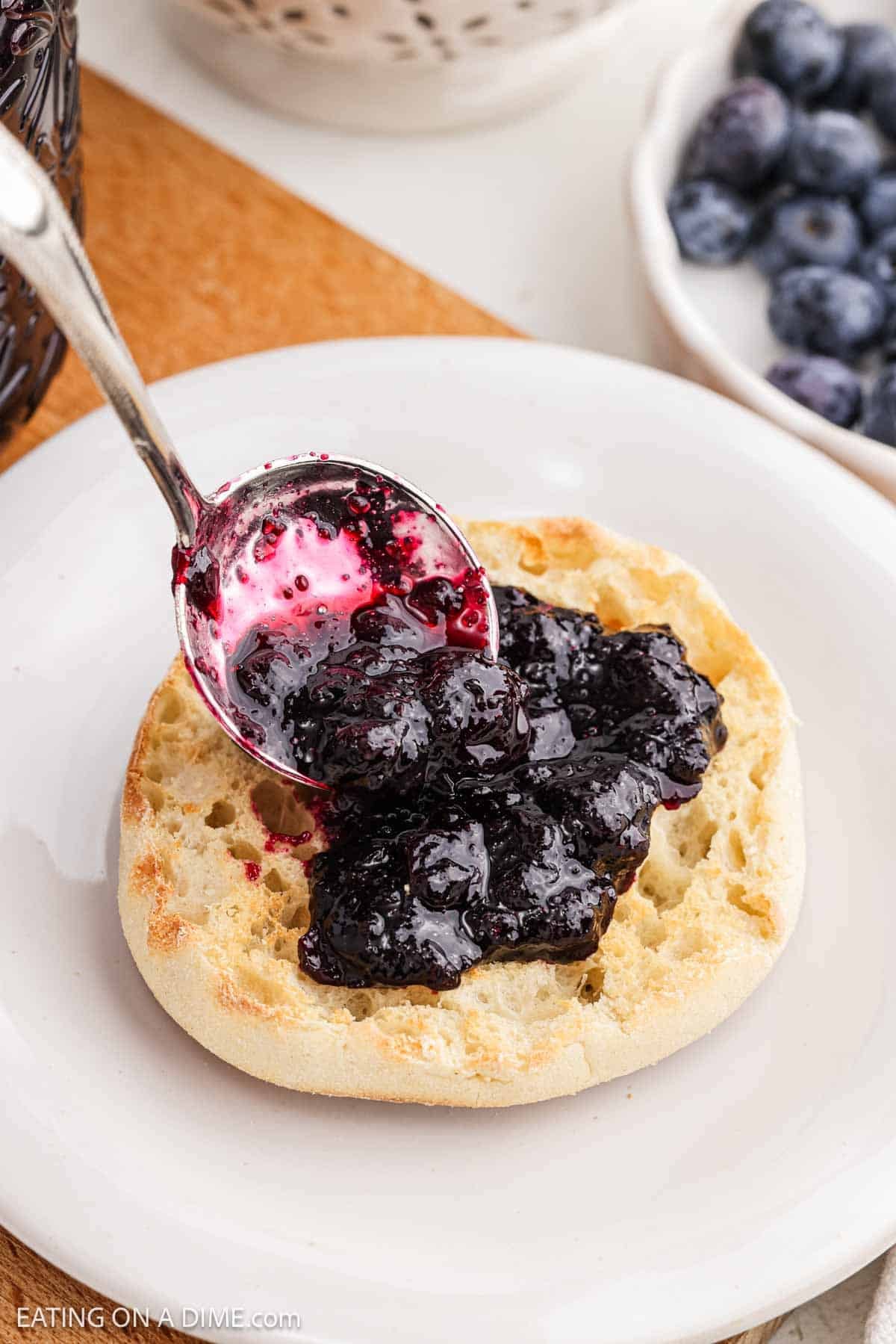
Storage and Freezer Instructions
Refrigerator
- Store in sterilized airtight mason jars in the refrigerator for up to 3 weeks. Always use clean utensils when scooping to prevent contamination and extend shelf life
Freezer
- Freeze in freezer-safe jars or containers leaving about ½ inch of headspace for expansion for up to 1 year. Thaw overnight in the refrigerator before using. Freezing is the best way to preserve a large summer batch of fresh blueberry jam
Room Temperature
- This recipe is not shelf stable for room temperature storage — it has not been processed through a water bath canning method and must be kept refrigerated or frozen
Frequently Asked Questions
No — blueberries contain natural pectin in their skins and the lemon juice activates it during cooking so the jam sets beautifully without any store-bought pectin.
Use a candy thermometer and cook to 218–220°F — or use the cold plate test by dropping a small spoonful on a frozen plate and checking that it wrinkles when pushed.
Yes — thaw completely and drain off any excess liquid before cooking so the jam does not become too watery.
Up to 3 weeks in the refrigerator in a sterilized airtight jar — always use clean utensils to prevent contamination. Freeze for up to 1 year.
It did not reach the right temperature — return to the stove and cook to 218–220°F stirring frequently. The jam also continues to thicken as it cools so give it time before deciding it has not set.
Yes — reduce to 1¾ cups for a less sweet result but do not reduce further as the sugar helps the jam set and preserves it properly.
After 14 years of developing recipes, I love that something this simple can make such a big impact. Fill a few mason jars for an easy homemade gift or enjoy a week of delicious breakfasts. Leave a star rating and comment to let me know what you spread it on first.
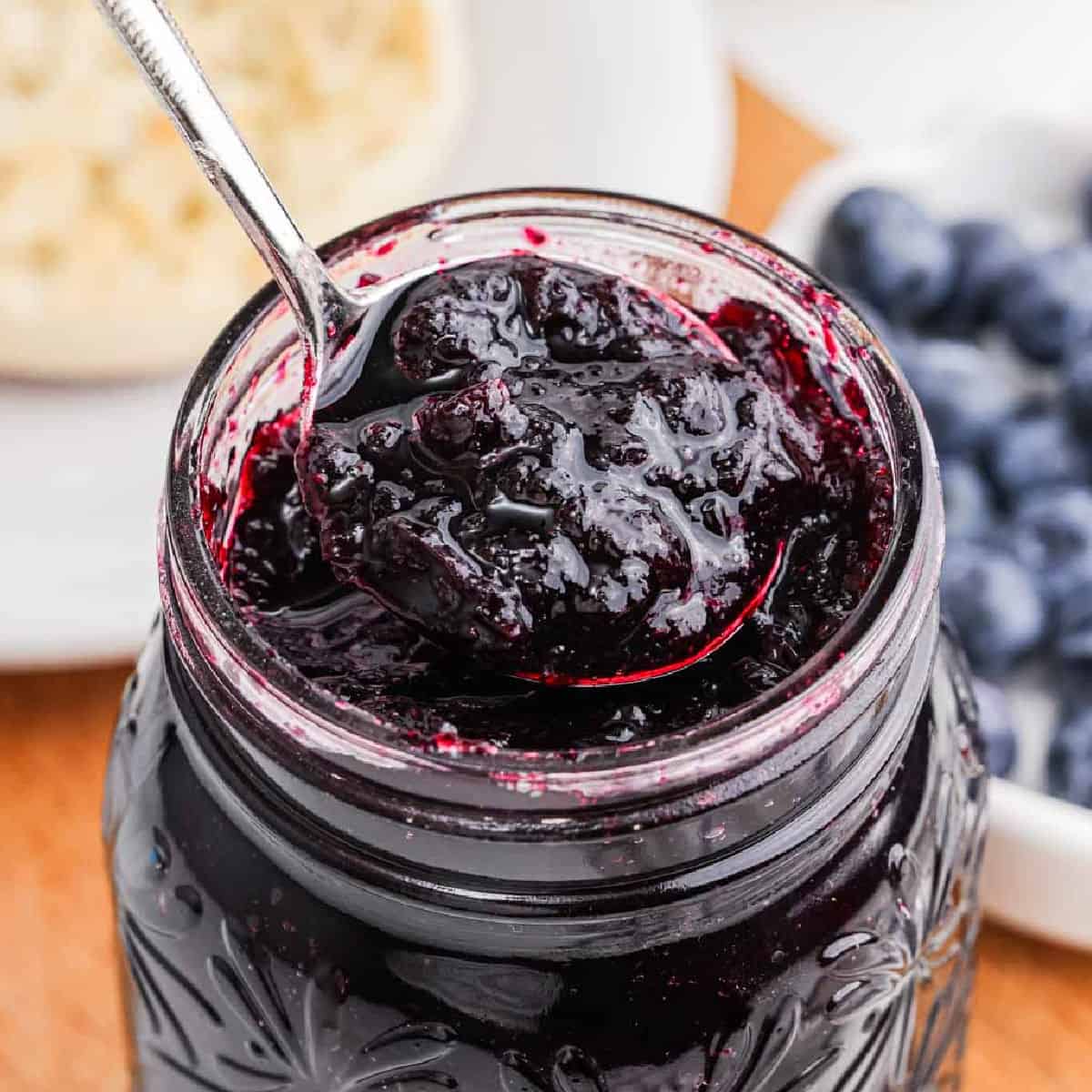
Blueberry Jam
Ingredients
- 6 cups fresh blueberries
- 2 cups granulated sugar
- 3 tablespoons freshly squeezed lemon juice
- ⅛ teaspoon salt
See how we calculate recipe costs.
Instructions
- Rinse the blueberries and pat them dry.
- Add the blueberries, sugar, lemon juice, and salt to a large 5-quart pot.
- Cook over medium heat for 5–7 minutes, stirring often, until the blueberries begin to burst and the sugar dissolves.
- Gently mash about half of the blueberries with a potato masher, leaving some whole for texture.
- Increase the heat to medium-high and bring the mixture to a steady boil, stirring frequently.
- Cook for 15–20 minutes, stirring often, until the jam thickens and reaches 218–220°F.
- Carefully pour the hot jam into sterilized mason jars.
- Let the jars cool completely, then refrigerate overnight before serving.
Recipe Notes

Such a simple recipe with really great results. This is definitely going into our regular rotation.
I love this on sourdough!
I love making Homemade Jam and loved that this only require 4 ingredients! So good
5 star
This is a super simple way to make blueberry jam! I am not a seasoned jam maker and I love that there is no pectin, no wax seal and just all natural ingredients! I boiled my 8 oz jars to sanitize them, but most modern dishwashers have a “Sanitize” cycle so using it would be simple. The end product is very good! Looking forwerd to my English Muffins in the mornings! Just a note for novices at jam making. The temperature thing is Very important! My first batch I overcooked because I forgot Carrie’s note about the temp and just cooked the fruit for 20 minutes! It came out very, very thick. (It’s an easy fix by just adding a couple of tablespoons of water and heating the jam up again) I used my mom’s old candy thermometer for the second batch and it was done in 15 minutes! Don’t be afraid to try this recipe. Your friends and family will be impressed!
Thank you so much for your kind comment and feedback. I appreciate you taking the time to commment.
Would this work with strawberries?
Sounds delicious! Can you use Splenda/Stevia in place of sugar? I didn’t know if it would set up and keep as long or not with a sugar substitute. Thanks!
Thanks so much! I haven’t tested this recipe with Splenda or Stevia, so I can’t say for sure how well it will set or how it will affect the shelf life. Sugar plays an important role in both the texture and preservation of the jam. If you decide to experiment, I’d recommend refrigerating or freezing it instead of canning. I’d love to hear how it turns out if you give it a try!
No bath canning???
Was hoping for a canning recipe to be able to give as a gift in a holiday basket.
Thanks for your question! This recipe wasn’t developed or tested for water bath canning, so I don’t recommend canning it for shelf storage. It does freeze really well, though, if you’re looking to make it ahead of time. I appreciate the suggestion—I’ll keep a canning-friendly version in mind for the future!