
If you love Japanese Steakhouse Hibachi Vegetables but don’t love the price tag, this easy Hibachi Vegetables recipe is for you. Crisp-tender zucchini, broccoli, and bell peppers cook quickly in garlic, butter, and soy sauce for that classic restaurant flavor, right at home.
This is one of those simple side dishes we make on busy weeknights because it’s affordable, fast, and pairs perfectly with hibachi dinners.
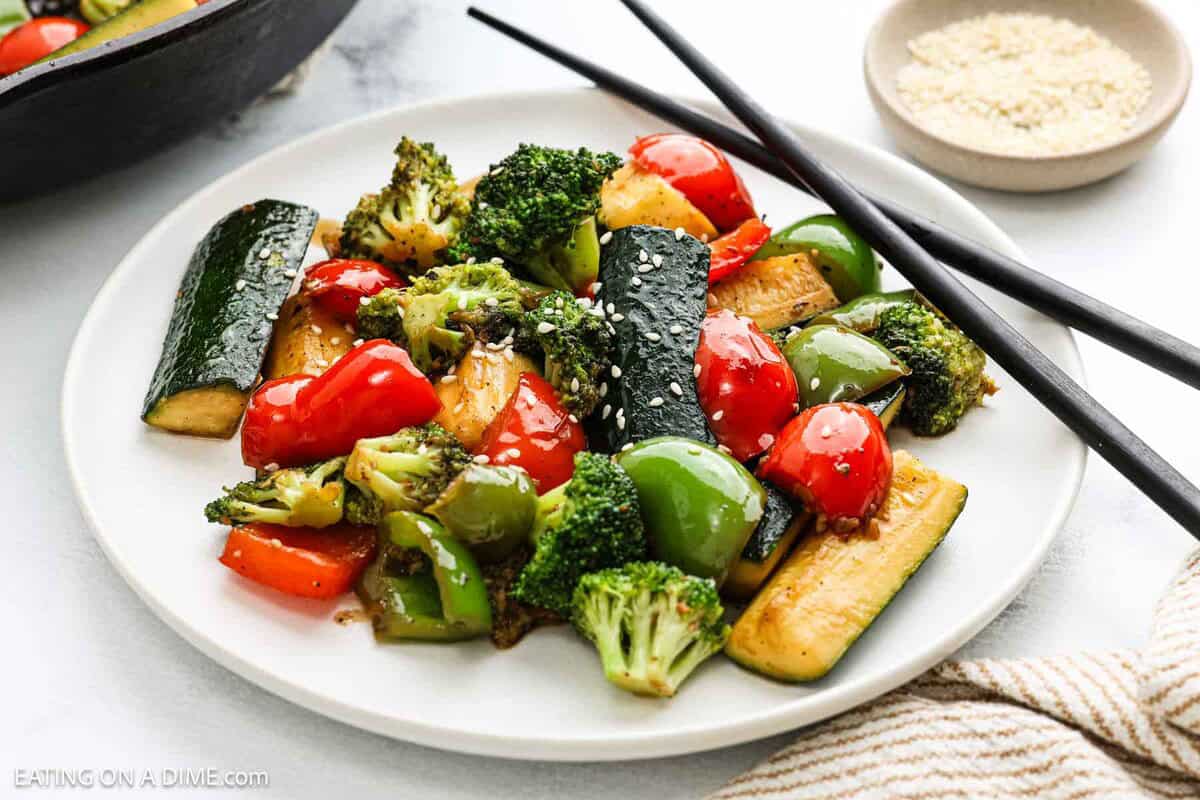
Why You’ll Love Hibachi Vegetables!

One of my favorite things about making hibachi vegetables at home is how simple and affordable they are. As a busy mom, I don’t always have time (or the budget) for hibachi restaurant, but I can still recreate those same bold flavors right in my own kitchen.
These hibachi veggies cook fast, use ingredients I usually already have on hand, and pair perfectly with these Baked Chicken Bites. It’s an easy way to add flavorful and fresh vegetables to hibachi chicken or hibachi steak without extra stress or extra cost for a complete meal.
If you love making this easy recipe, try Teriyaki Vegetables or these Vegetable Kabobs.
Recipe Snapshot
- Serves: 4
- Prep Time: 10 minutes
- Cook Time: 10–12 minutes
- Cooking Method: Blackstone or Stovetop
- Skill Level: Beginner
- Budget-Friendly: Yes
- Best For: Weeknight dinners, meal prep, hibachi night at home
Ingredients
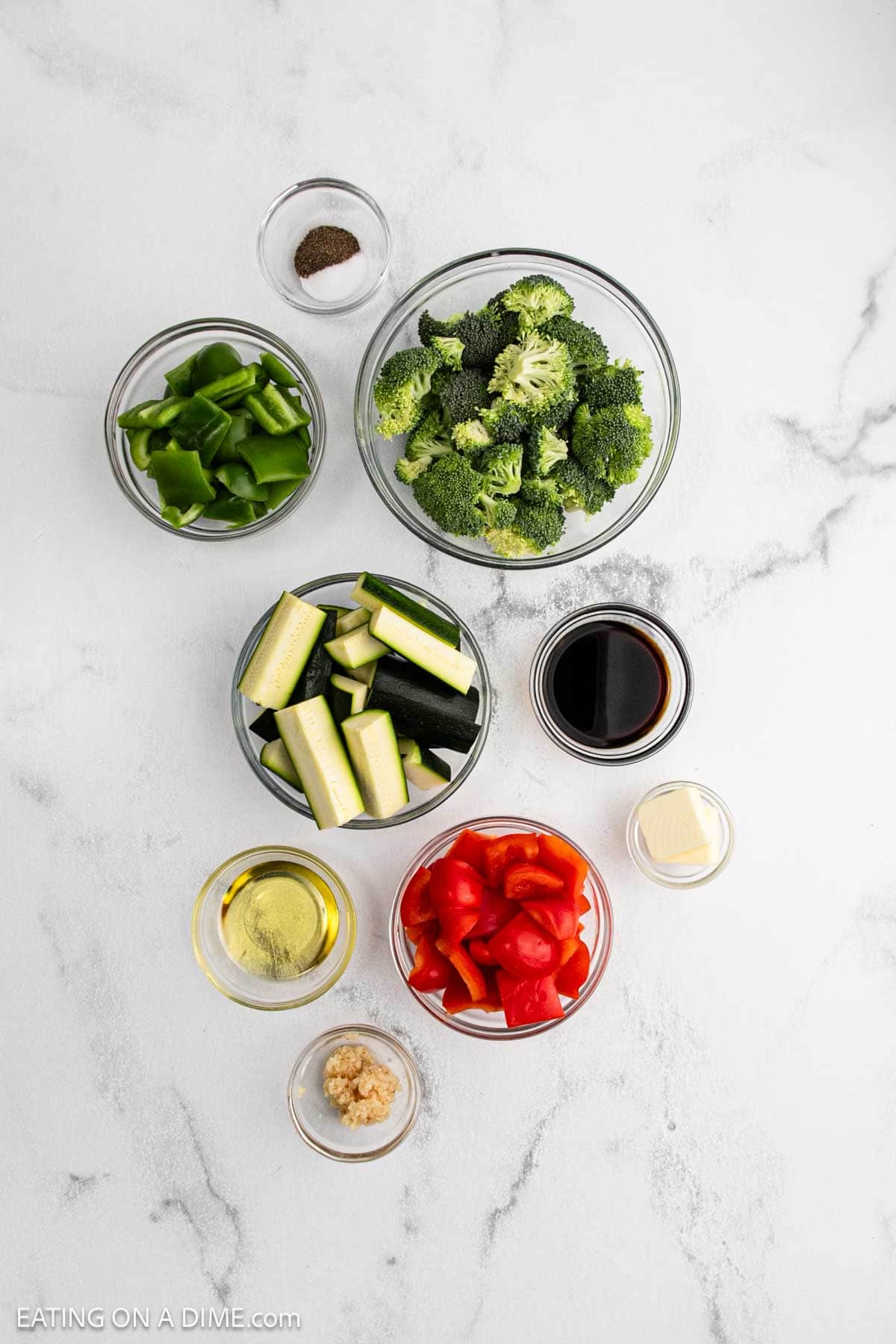
- Avocado Oil – High smoke point oil that prevents sticking and helps vegetables sear properly. You can substitute vegetable oil, olive oil or canola oil.
- Large Zucchini – A classic hibachi vegetable that softens quickly while keeping a slight bite. Cut into spears so they caramelize instead of steaming.
- Broccoli Florets – Slice flatter for better surface contact with the griddle — this helps create those golden, slightly crispy edges.
- Green Bell Pepper and Red Bell Peppers – Adds color and sweetness. Red peppers are slightly sweeter than green.
- Salt and Pepper – Simple spices is all you need
- Fresh Garlic, minced – Fresh minced garlic gives the signature hibachi flavor. Add after vegetables start softening so it doesn’t burn. You can substitute with ½ teaspoon of garlic powder.
- Soy Sauce – Adds savory umami flavor. Use low-sodium soy sauce or coconut aminos if preferred.
- Butter – Finishes the vegetables with that classic Japanese steakhouse richness.
How to Make Hibachi Vegetables
Step 1 – Preheat a large skillet, griddle or cast iron pan over medium high heat. Add the oil to the pan or wok.
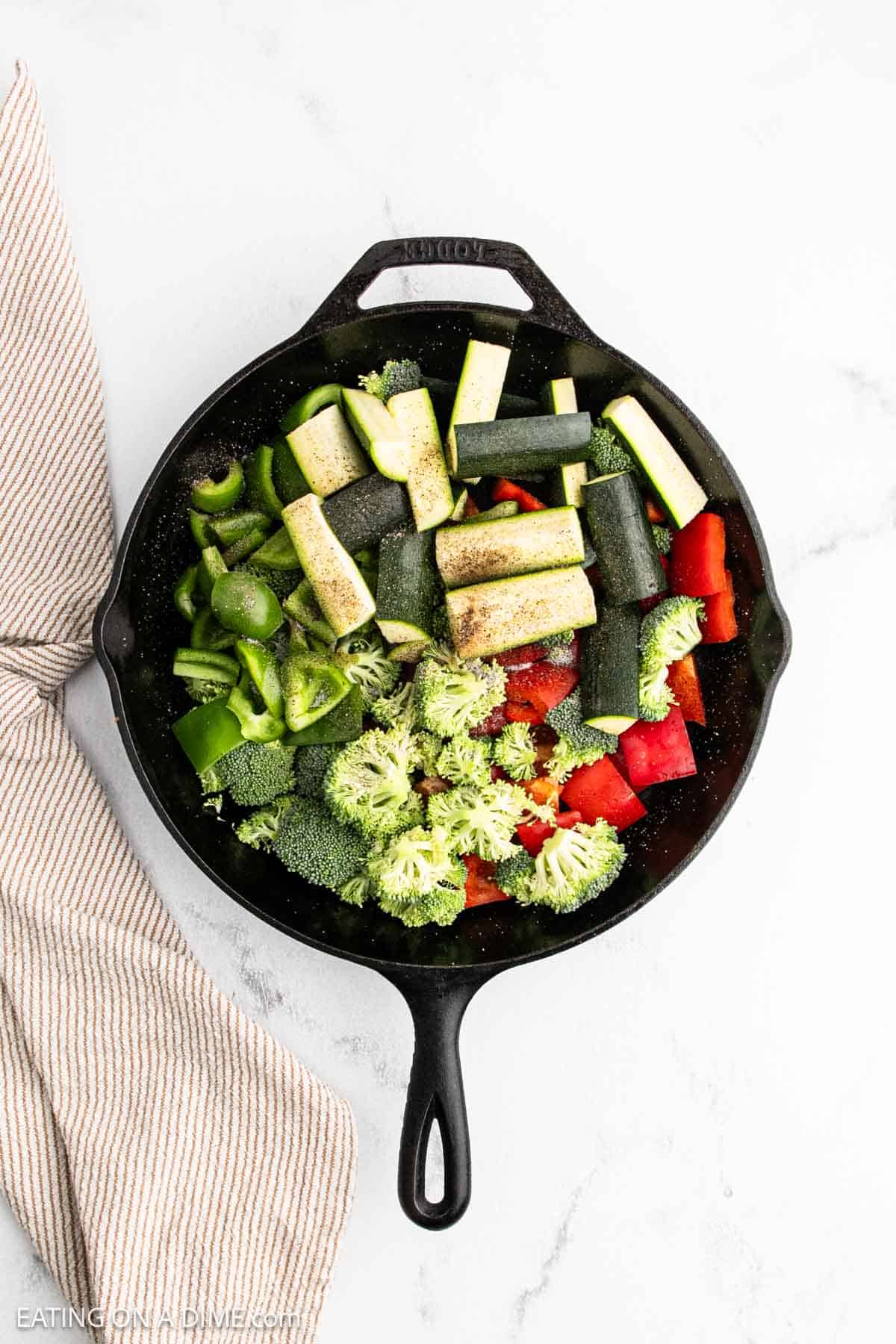
Step 2 – Add the veggies to the pan. Season them with salt and pepper and cook until they start to soften (3-4 minutes).
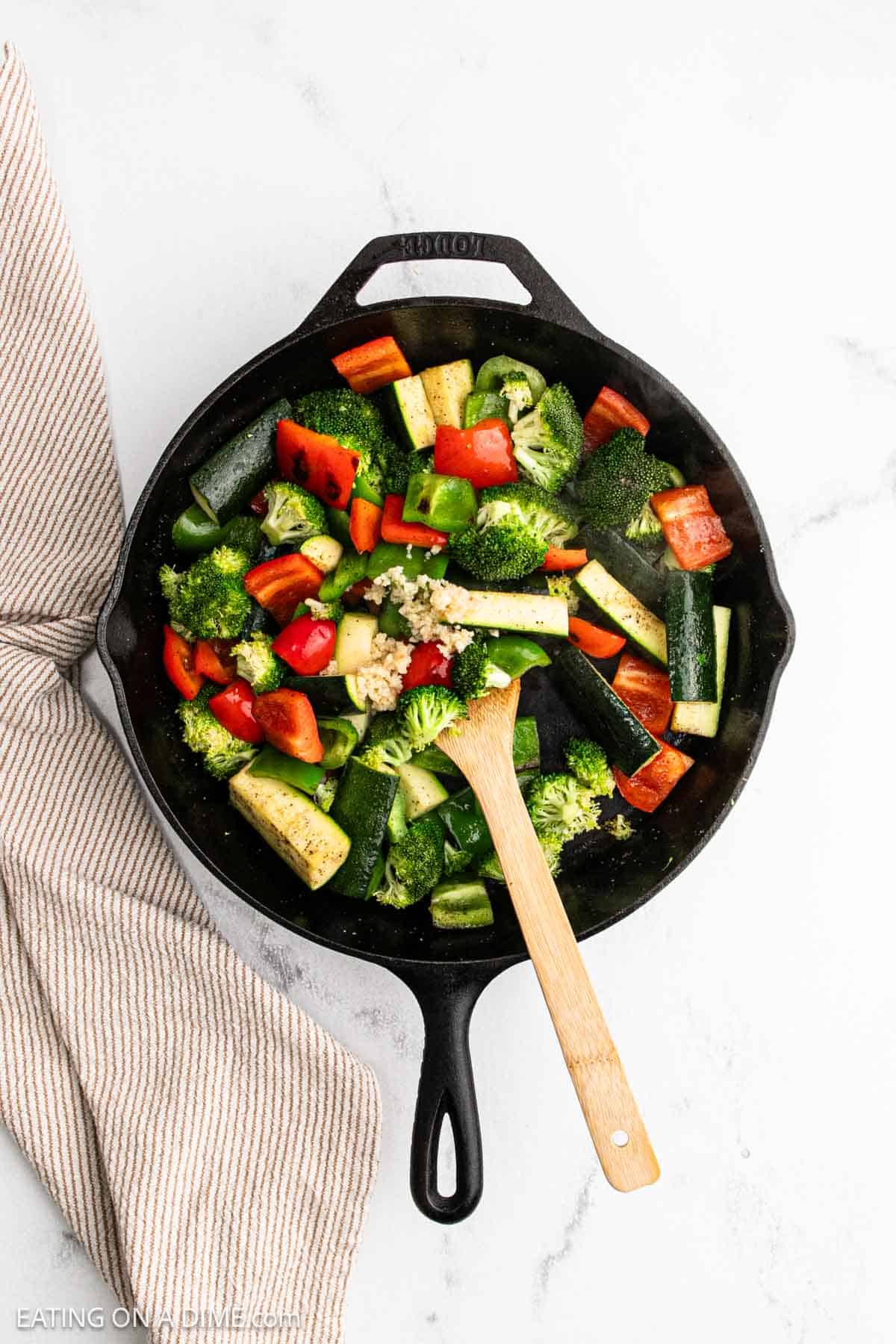
Step 3 – Add the minced garlic to the pan and sauté with the other vegetables over medium high until they are tender (8-10 minutes).
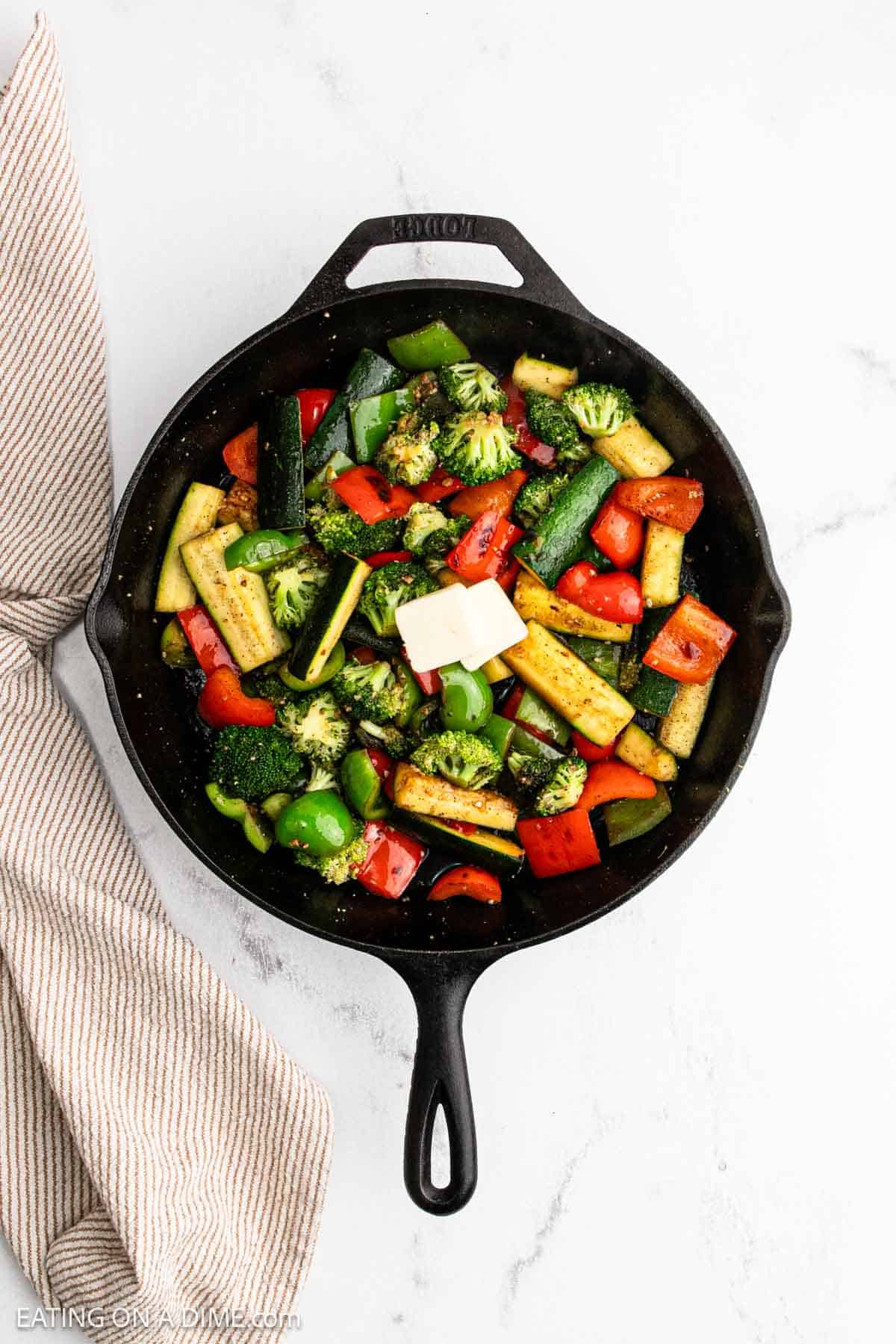
Step 4 – Toss in the butter and soy sauce. Sauté for a few minutes until the butter is melted and all veggies are coated.
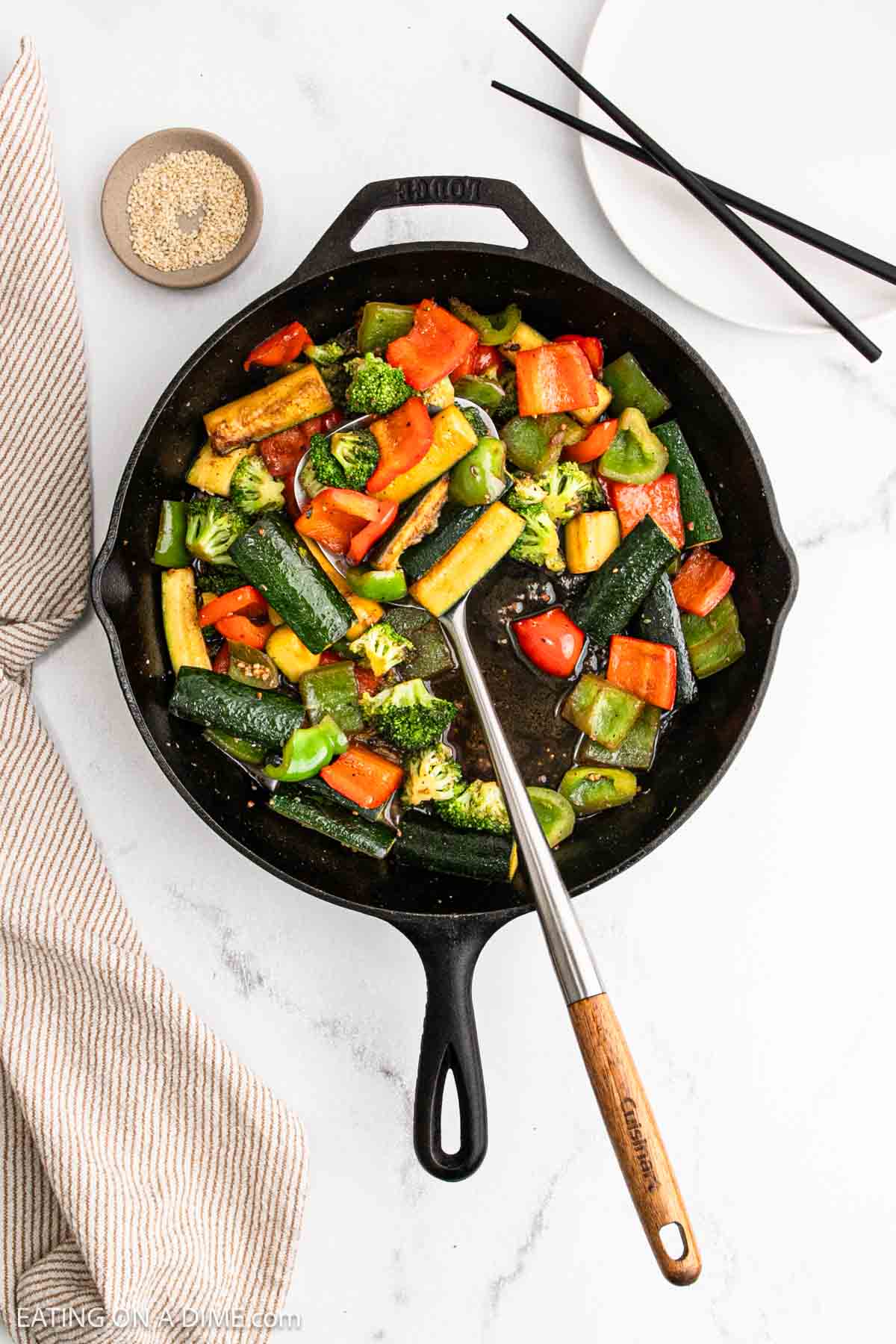
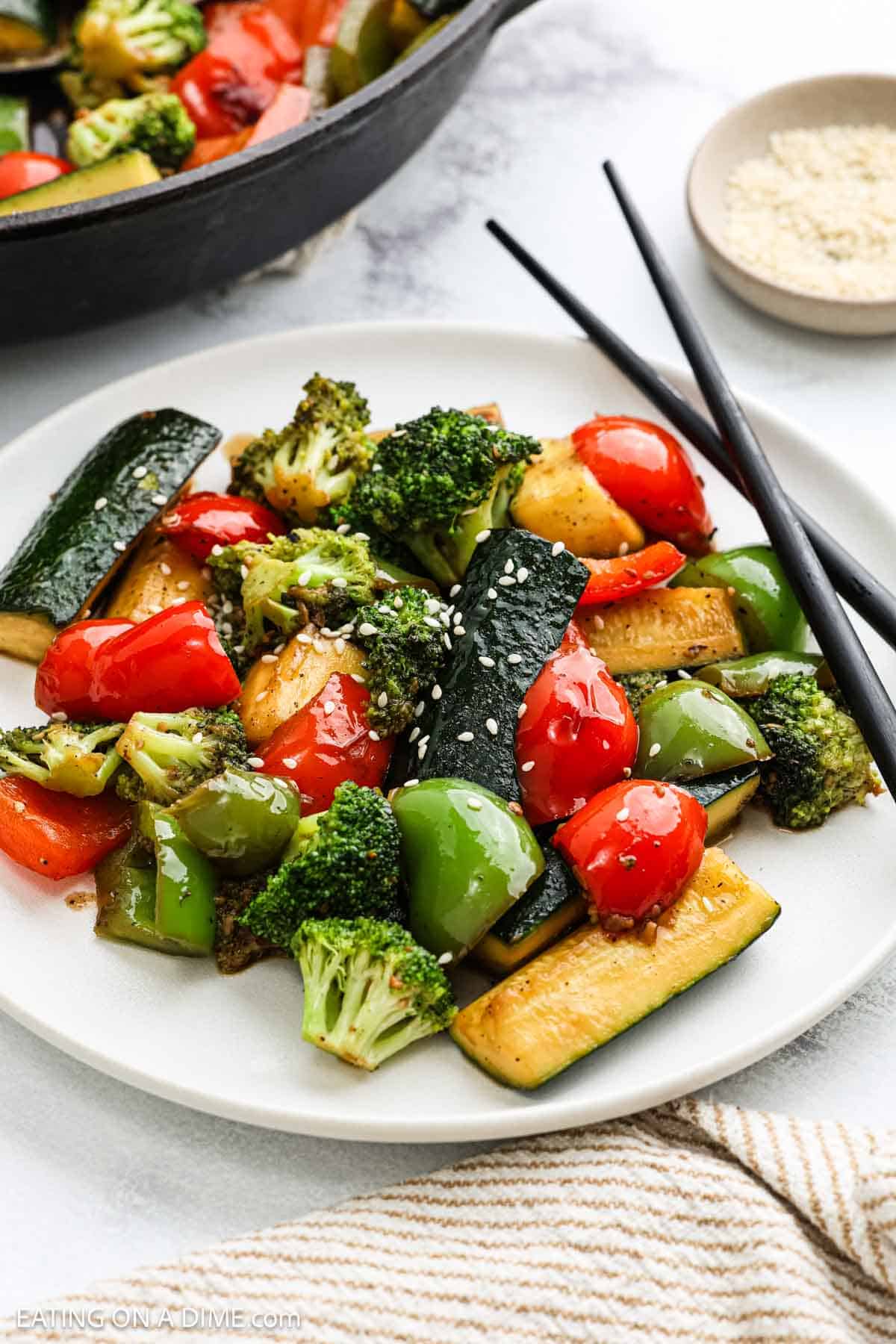
Step 5 – Remove from the pan and serve while warm with a side of Yum Yum Sauce Recipe and topped with sesame seeds. Enjoy!
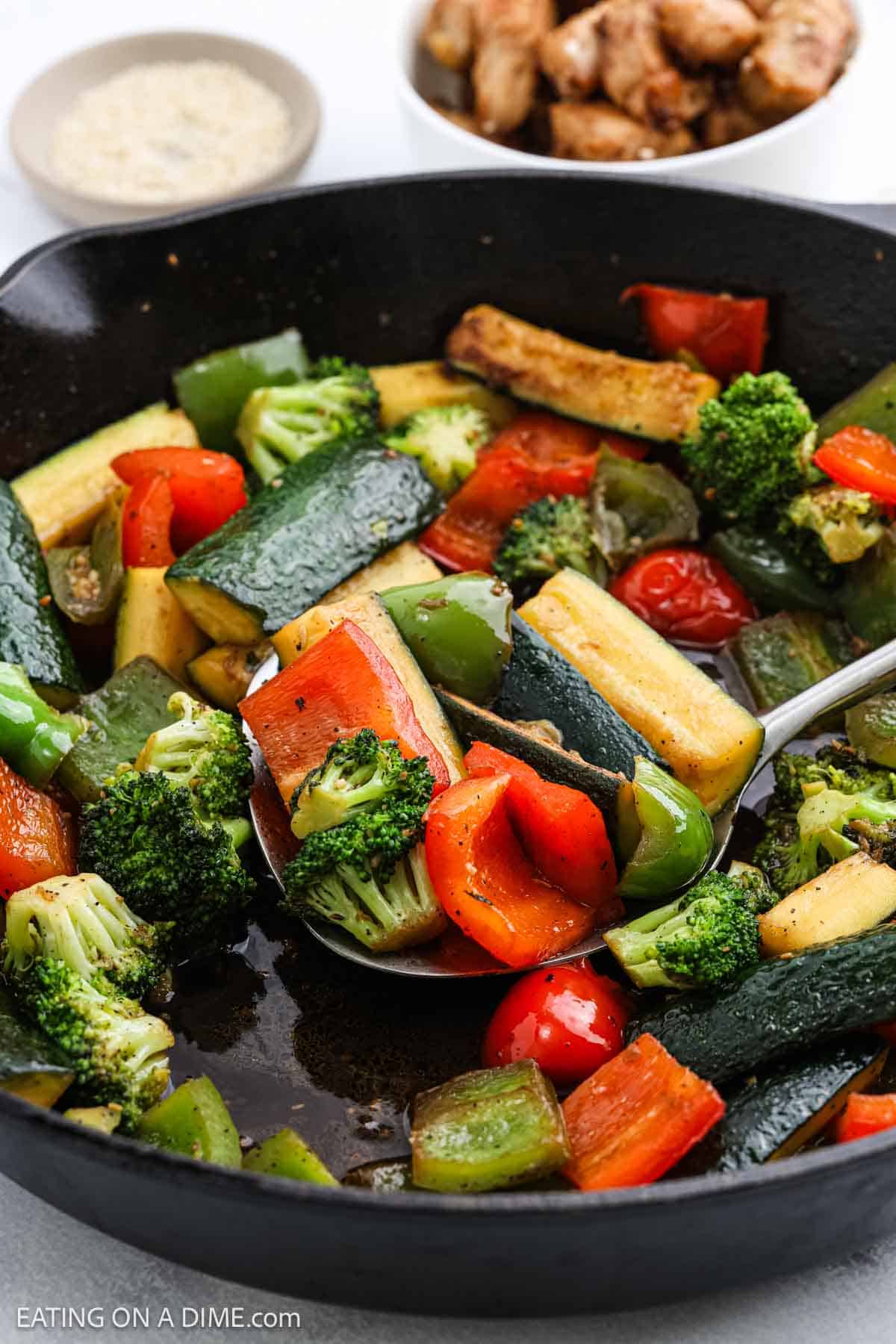
Tips for Success
- Cut vegetables evenly so they cook evenly and at the same time.
- Don’t overcrowd the pan as vegetables need space to sear.
- Cook over medium-high heat to avoid steaming.
- Add garlic after vegetables begin softening to prevent burning.
- Let vegetables sit undisturbed for 1–2 minutes before flipping to develop color.
- Finish with butter at the end for authentic steakhouse flavor.
- For extra flavor, add a splash of sesame oil before serving.
What Vegetables Are Used in Hibachi?
Traditional Japanese steakhouse hibachi vegetables typically include:
- Zucchini
- Onions
- Mushrooms
- Broccoli
- Bell peppers
- Carrots
- Yellow Squash
You can customize based on what you have in your fridge, which makes this recipe perfect for using up leftover vegetables.
Storage & Reheating Tips
- Store leftovers in an airtight container in the refrigerator for up to 5 days.
- Reheat in a skillet over medium heat for best texture.
- Avoid microwaving too long or vegetables may become soft.
- Great for meal prep bowls with chicken and rice.
Frequently Asked Questions
Yes. They are made with simple vegetables and minimal ingredients. You can reduce butter or use low-sodium soy sauce if desired.
Absolutely. A hot flat top griddle gives them the best sear and flavor.
They were likely overcrowded or cooked over too low heat. High heat is key.
Yes! These are classic hibachi additions.
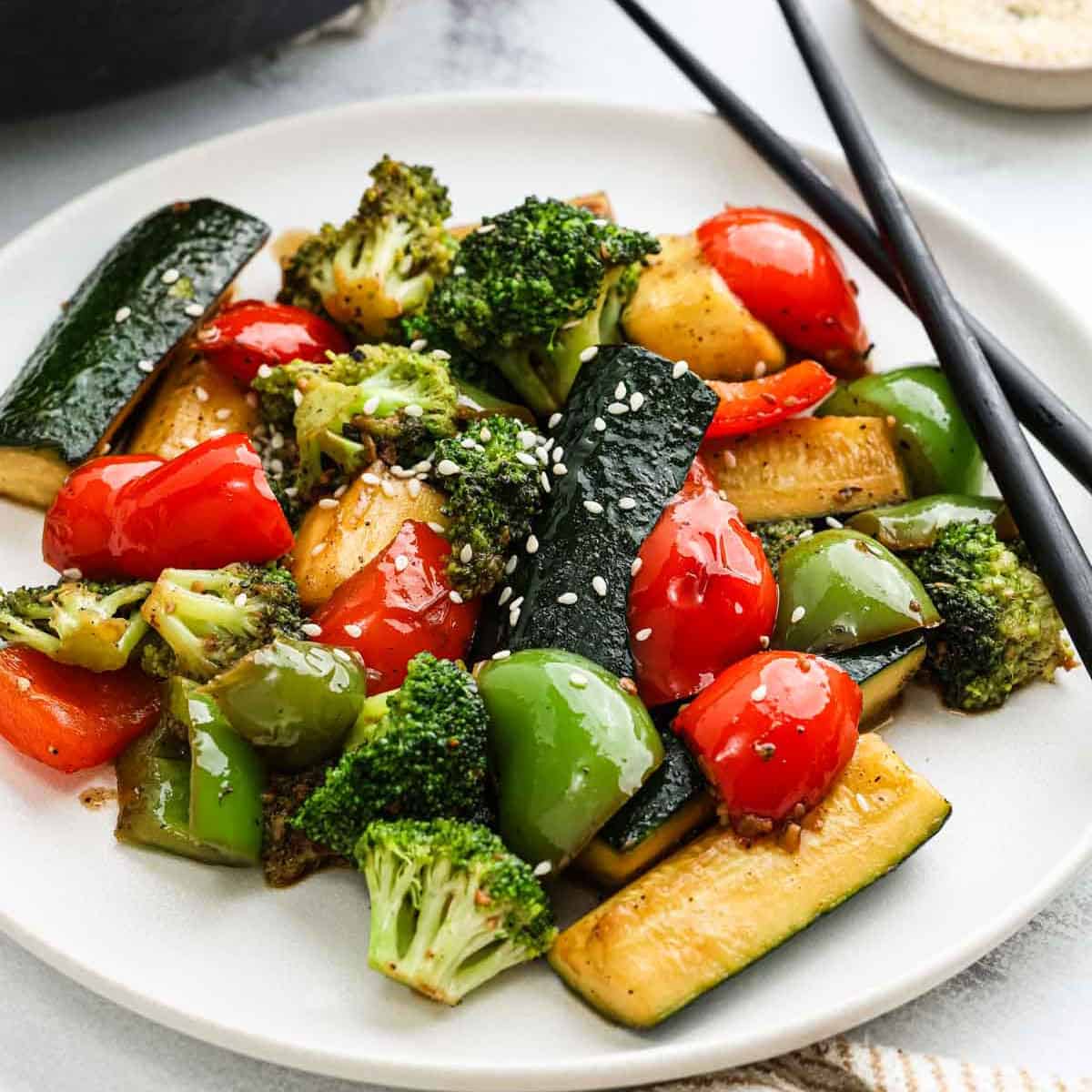
Hibachi Vegetables
Ingredients
- 2 Tablespoons Avocado Oil
- 1 Large Zucchini cut into approximately 2 inch spears
- 2 cups Broccoli Florets sliced into flatter pieces
- 1 Green Bell Pepper cut into 1 inch pieces
- 1 Red Bell Peppers cut into 1 inch pieces
- ½ teaspoon Pepper
- ½ teaspoon Salt
- 3 cloves Garlic minced (or 1 Tablespoon pre-minced garlic)
- 2 Tablespoons Soy Sauce
- 2 Tablespoons Butter
See how we calculate recipe costs.
Instructions
- Preheat a large skillet, griddle or cast iron pan over medium high heat.
- Add 2 tablespoons of oil to the pan.
- Add 1 zucchini, 2 cups of broccoli florets, 1 red and green bell pepper, to the pan. Season them with ½ teaspoon of salt and ½ teaspoon of pepper and cook until they start to soften (3-4 minutes).
- Add 3 cloves of minced garlic to the pan and sauté with the other vegetables over medium high until they are tender (8-10 minutes).
- Toss in 2 tablespoons of butter and 2 tablespoons of soy sauce. Sauté for a few minutes until the butter is melted and all veggies are coated.
- Remove from the pan and serve while warm. Enjoy!
Recipe Video
Recipe Notes
Nutrition Facts
More Easy Hibachi Recipes


If you try these Hibachi Vegetables, leave a comment and star review below. We love hearing how you serve them and it helps other families find affordable, easy recipes they can trust.

I have love Japanese food and Asian for a very long time and have cooked it like yours but If you make it restaurant style you need a few more ingredients but like your with less tense thanks for all of your recipes
Thank you so much for sharing and for the positive review Mark! I’m so glad you are enjoying the recipes!
These turned out great and my kids loved them. I’m always looking for fun and tasty ways to get them to eat veggies and this worked. Thank you!
Woohoo! I love hearing this Jonathan. Thank you so much for sharing and for the positive review!
These Hibachi Vegetables made the best side dish with our Grilled Steak! So healthy and easy to make