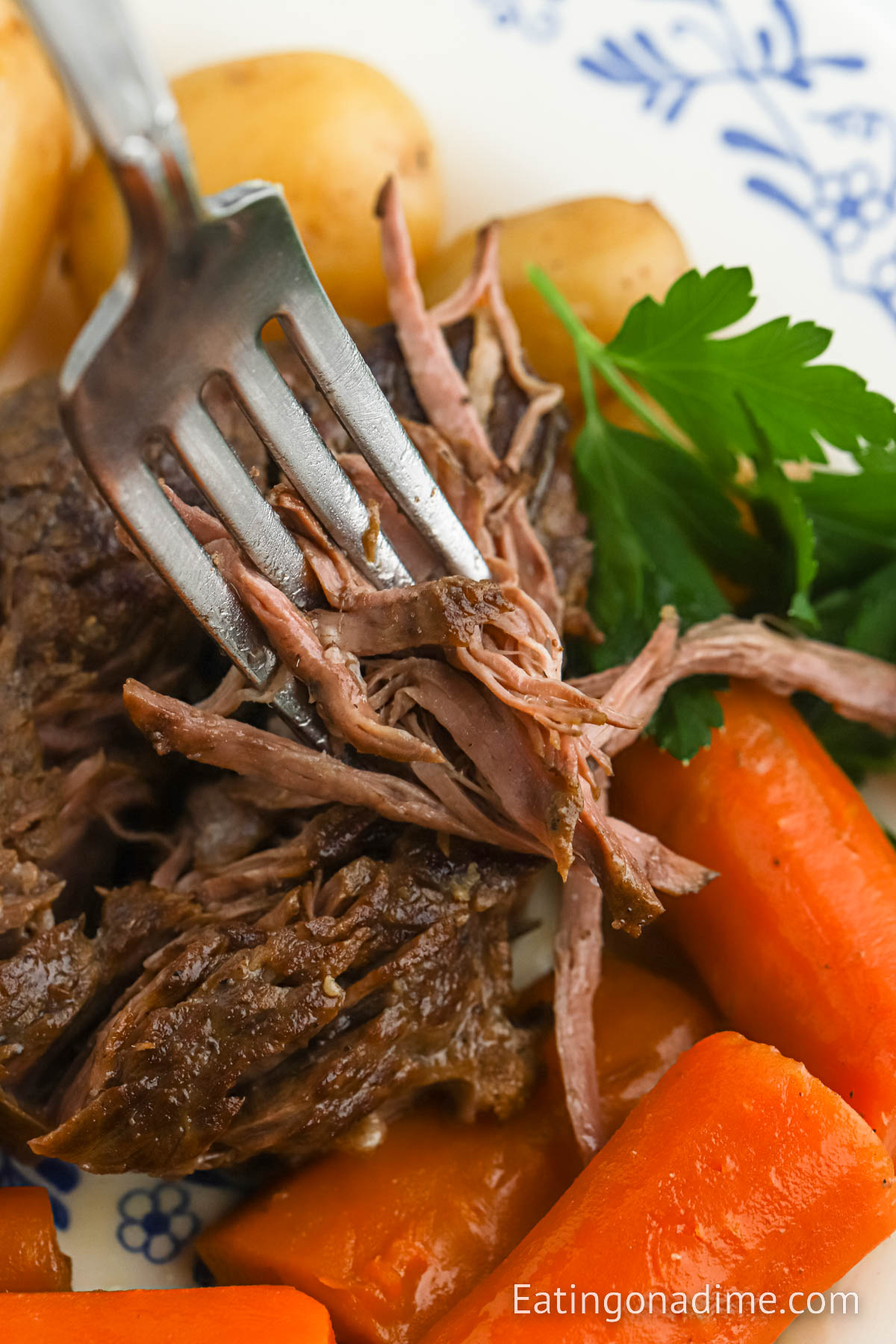
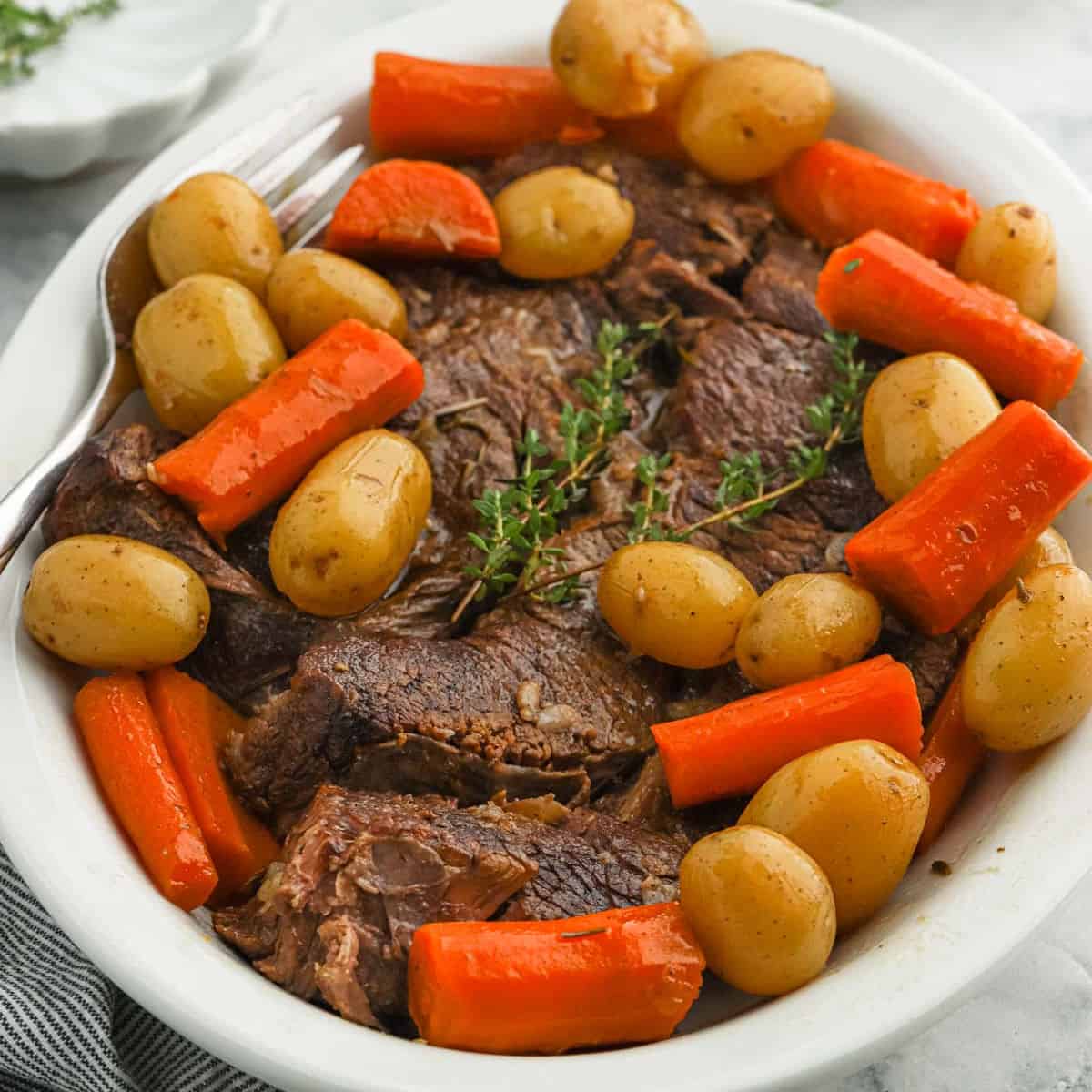
This Dutch Oven Pot Roast is made with beef chuck roast, carrots, potatoes, onion, red wine, and rosemary. It slow cooks at 300°F until the meat is fall apart tender and the braising liquid becomes a rich, savory gravy.
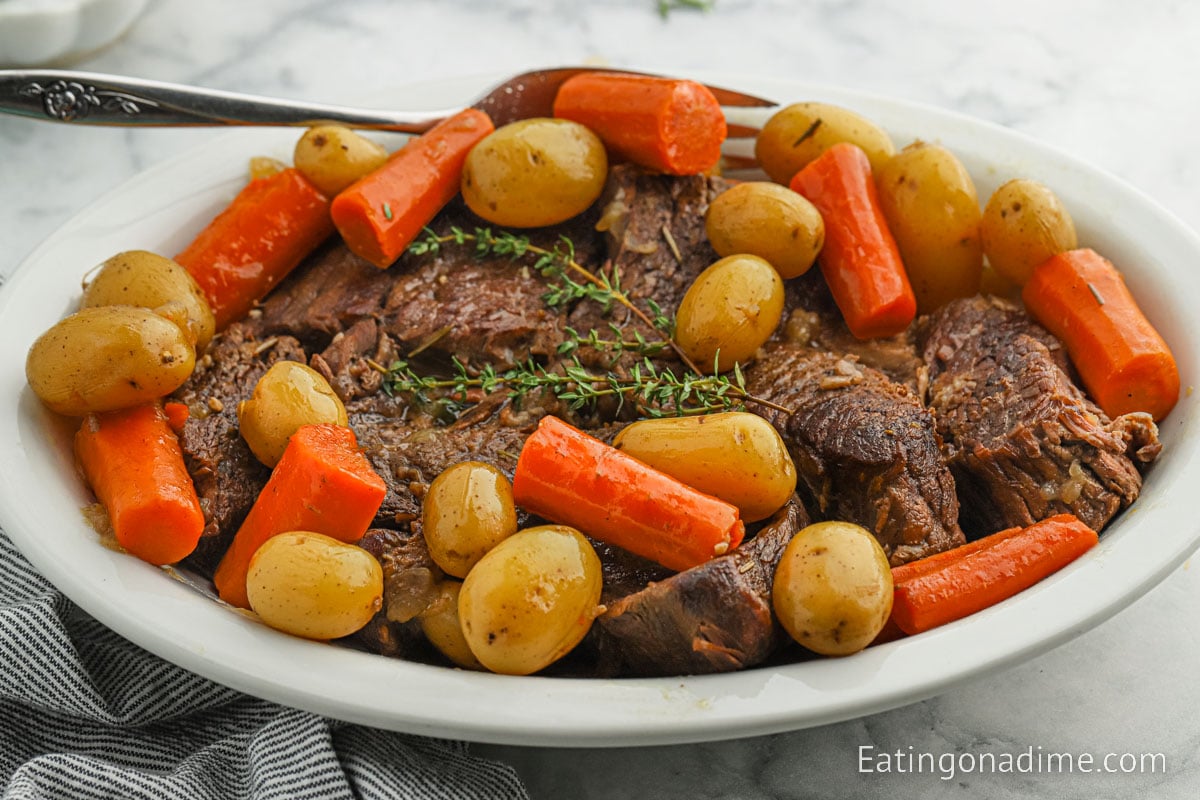
Sunday pot roast in the Dutch oven has become one of our most anticipated weekend dinners — the whole house fills with the most incredible aroma all afternoon and by the time we sit down the meat is so tender it falls apart with just a fork. After 14 years of developing recipes I have made pot roast every way imaginable and the Dutch oven version is genuinely the best result I have ever gotten from this cut of meat.
Why You’ll Love This Recipe!

- Rich fall-apart tender chuck roast braised low and slow with red wine beef broth rosemary and bay leaves
- Everything cooks in one pot
- The Dutch oven sear locks in the juices and creates a depth of flavor a slow cooker simply cannot replicate
- Perfect for Sunday dinners, holiday meals and leftovers that turn into three completely different second meals
Ingredients
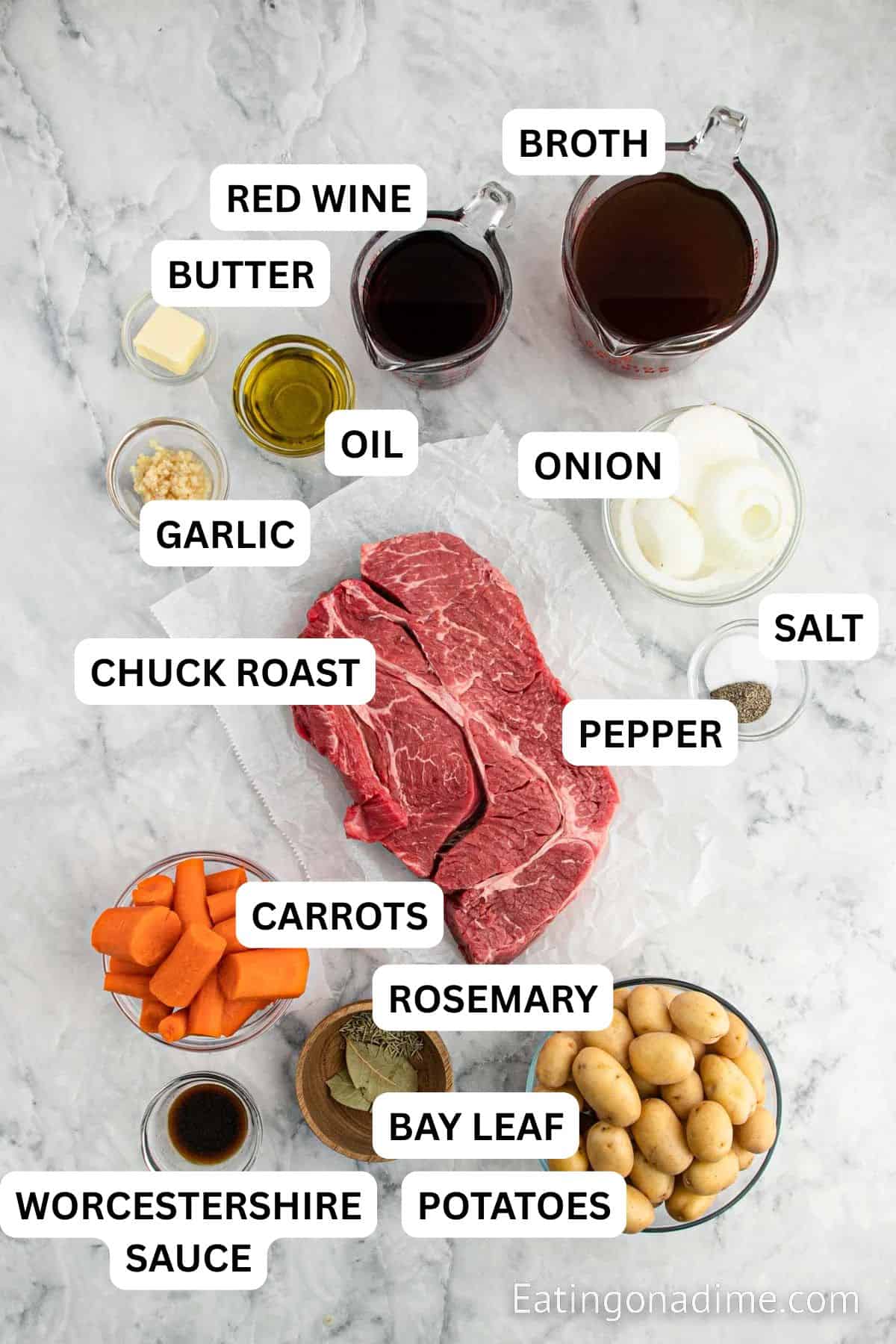
- Beef chuck roast — the best cut for Dutch oven pot roast. Chuck roast has the right amount of fat and connective tissue that breaks down during the long low and slow braise into incredibly tender fall-apart meat. Look for a 3-pound roast with good marbling throughout — the more marbling the more flavorful and juicy the finished roast. Brisket or round roast work as substitutes but chuck gives the best result
- Salt and black pepper — essential seasoning applied generously to all sides of the roast before searing. Seasoning before searing creates a deeply flavored crust that infuses into the braising liquid throughout the entire cook time
- Butter — combined with olive oil for searing the roast. Butter adds richness and helps create that deep mahogany crust during the searing step. Always use unsalted so you can control the final seasoning
- Olive oil — combined with the butter to raise the smoke point slightly so the butter does not burn during the high heat searing step. Extra virgin olive oil gives the best flavor
- Yellow onion, sliced — adds a sweet savory depth to the braising liquid that develops beautifully during the long cook time. Yellow onion gives the richest most flavorful result — white onion works as a direct substitute
- Carrots, peeled and cut into 2-inch pieces — cut into large pieces so they hold their shape during the long braise and become perfectly tender without turning mushy. Baby carrots work as a time-saving substitute — no cutting needed
- Minced garlic — adds bold savory depth throughout the braising liquid. Fresh minced gives the most aromatic result. Jarred minced garlic works as a convenient substitute on a busy day
- Beef broth — the primary braising liquid that keeps the roast moist and creates the rich savory gravy. Low sodium gives you more control over the final seasoning. Beef stock gives an even richer deeper result if you have it on hand
- Red wine — adds a rich complex depth to the braising liquid that elevates this from a basic pot roast to something genuinely special. Use any dry red wine you would drink — Cabernet Sauvignon or Merlot both work beautifully. Substitute with an equal amount of additional beef broth for an alcohol-free version with no other changes needed
- Worcestershire sauce — adds a deep savory umami note that you cannot identify but would immediately notice if it was missing. A small amount goes a long way — do not skip it
- Dried rosemary — the classic herb pairing for beef that infuses throughout the braising liquid during the long slow cook. Fresh rosemary works as a substitute — use double the amount since fresh herbs are less concentrated than dried
- Bay leaves — adds a subtle herby depth that develops slowly during the long braise. Always remove before serving — bay leaves are not edible
- Baby yellow potatoes — added halfway through cooking so they become perfectly tender without turning mushy. Baby yellow potatoes hold their shape beautifully during braising and absorb the rich braising liquid for incredible flavor. Regular yellow potatoes cut into large chunks work as a substitute
Carrie’s Tip: Take the chuck roast out of the refrigerator 30 minutes before searing — a room temperature roast sears significantly better than a cold one because it makes contact with the hot pan evenly across the entire surface. A cold roast dropped into a hot pan drops the temperature immediately and steams instead of sears which is exactly what you want to avoid.
How to Cook a Pot Roast in a Dutch Oven
Follow my simple instructions to learn how to make your own pot roast in a Dutch oven.
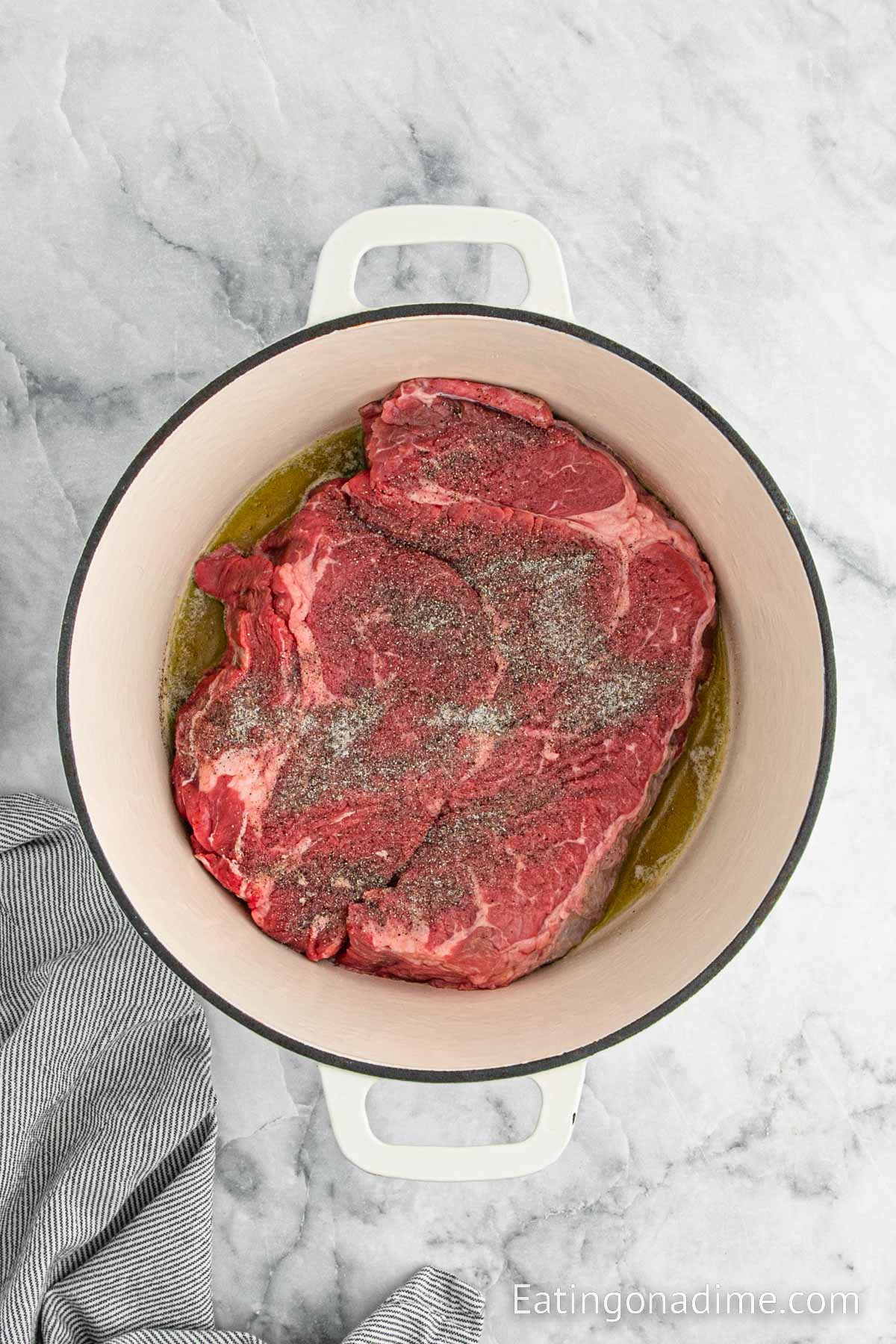
Step 1 – Heat Oven – Preheat the oven to 300 degrees Fahrenheit. Season the roast with salt and pepper on all sides of the roast.
Step 2 – Heat the butter and olive oil in a large dutch oven over medium high heat. Brown the meat on both sides (approximately 5 minutes per side). Remove the roast to a plate and set aside. Reduce the heat to medium, stir in 1 cup of the beef broth, and scrape the brown bits off the bottom and sides of the pan.
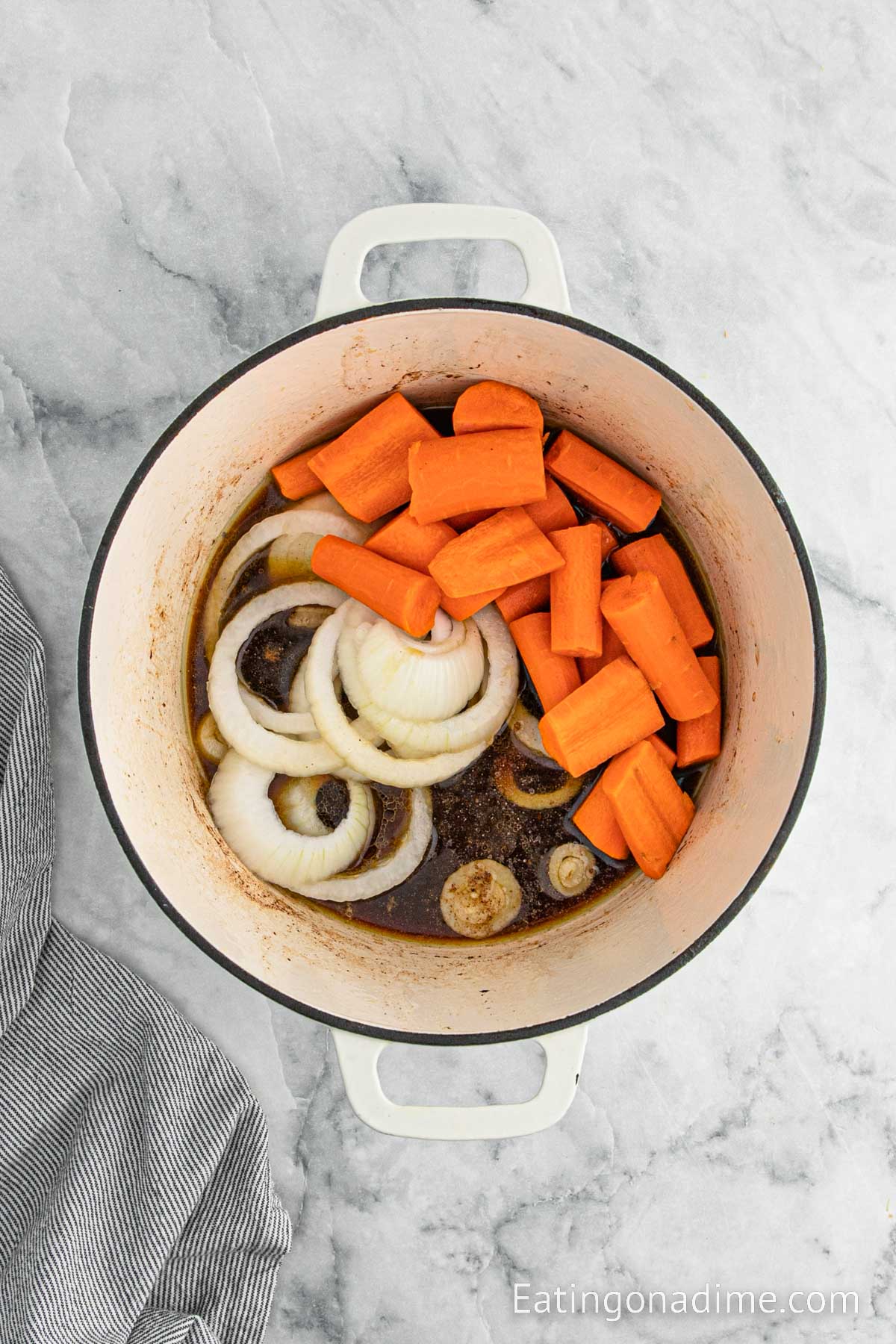
Step 3 – Add in Onions and Carrots – Stir in the onions and carrots. Sauté for 5-7 minutes until the onions are translucent. Then stir in the garlic and cook for 1 minute until aromatic.
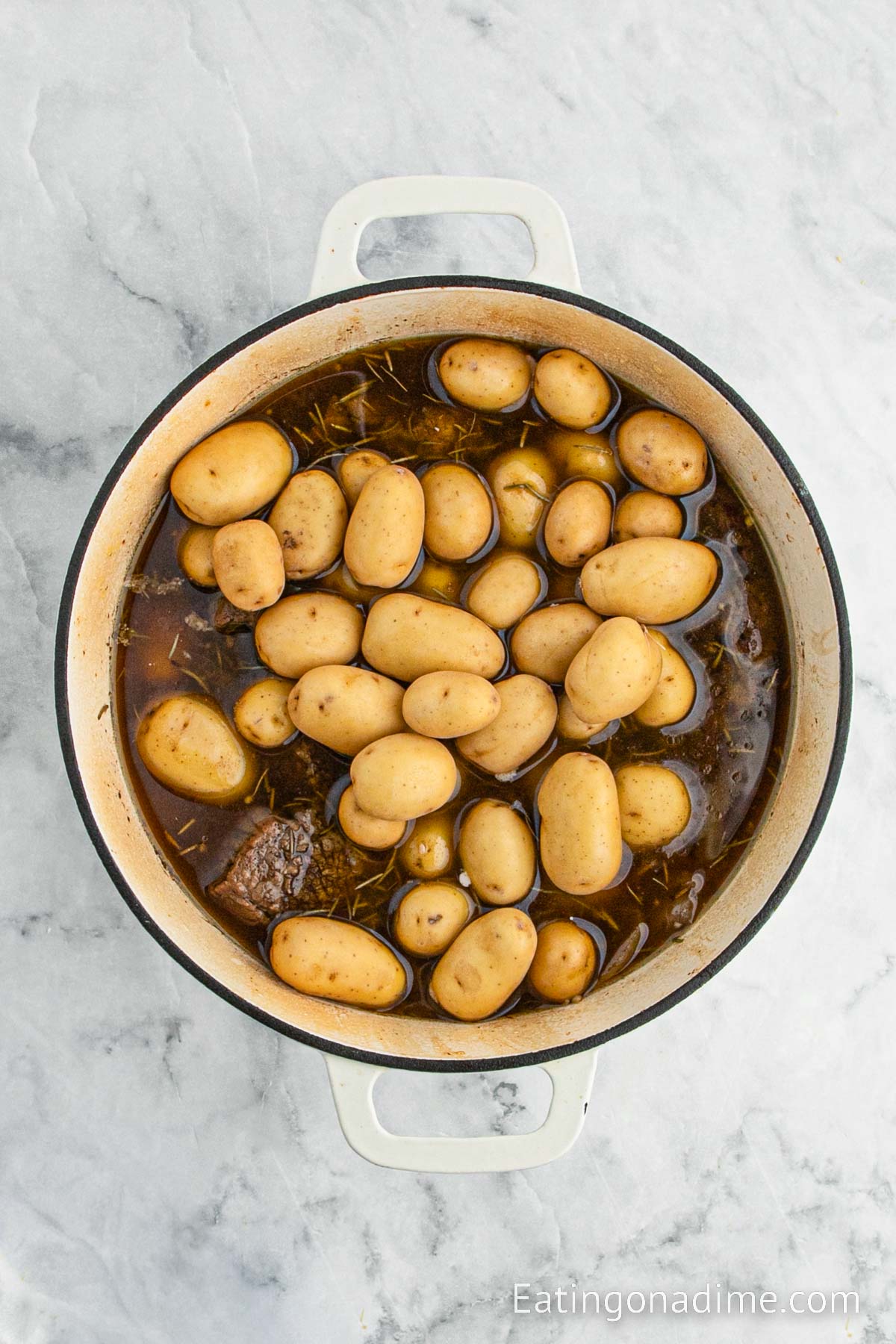
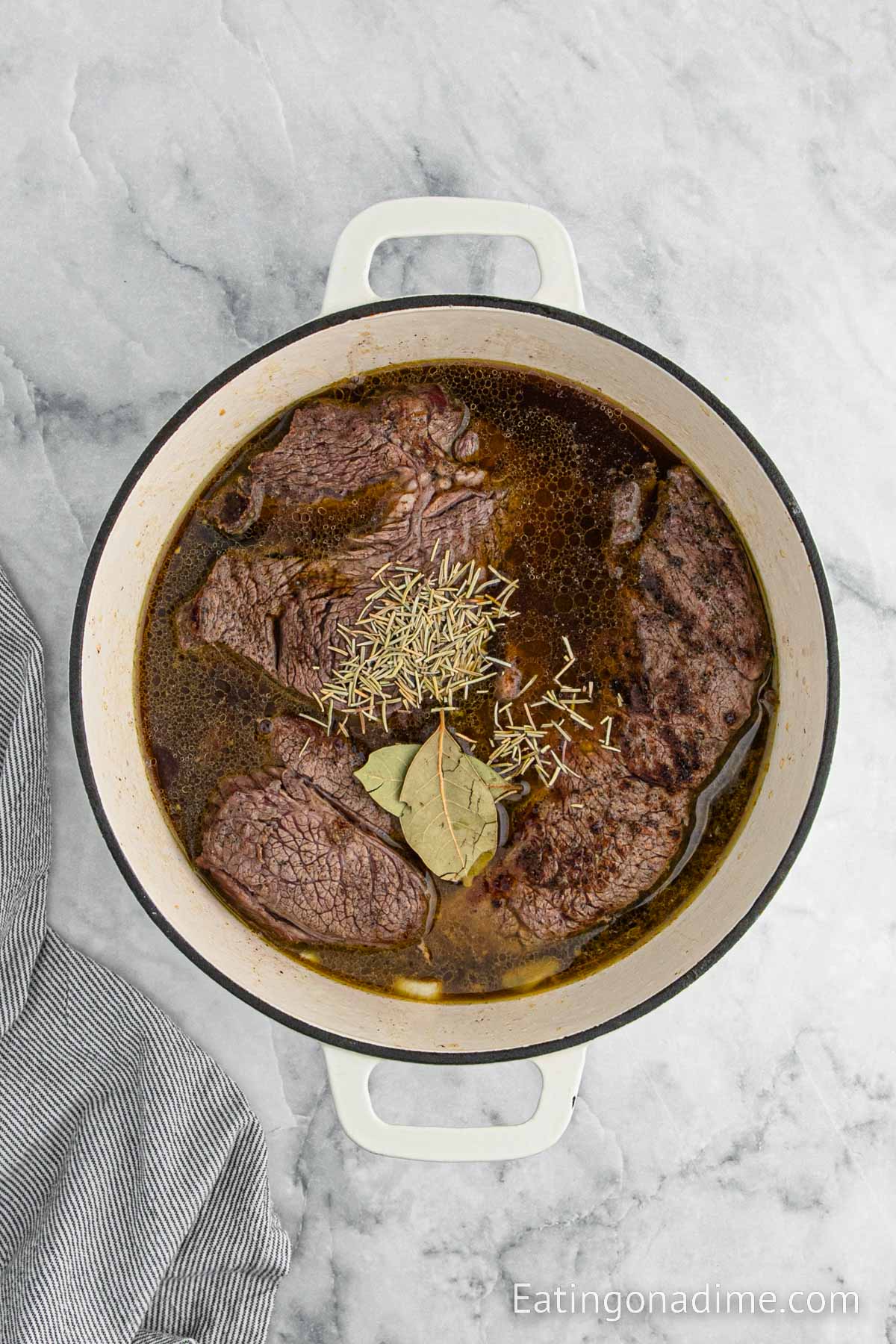
Step 4 – Add Roast – Place the roast back into the pan on top of the vegetables. Add in the remaining beef broth, red wine, Worcestershire sauce, rosemary and bay leaves. Cover with a lid and bake for 1 ½ hours. Then add the baby potatoes to the dutch oven. Cover and cook for 2-2 ½ more hours until the meat and vegetables are fork tender.
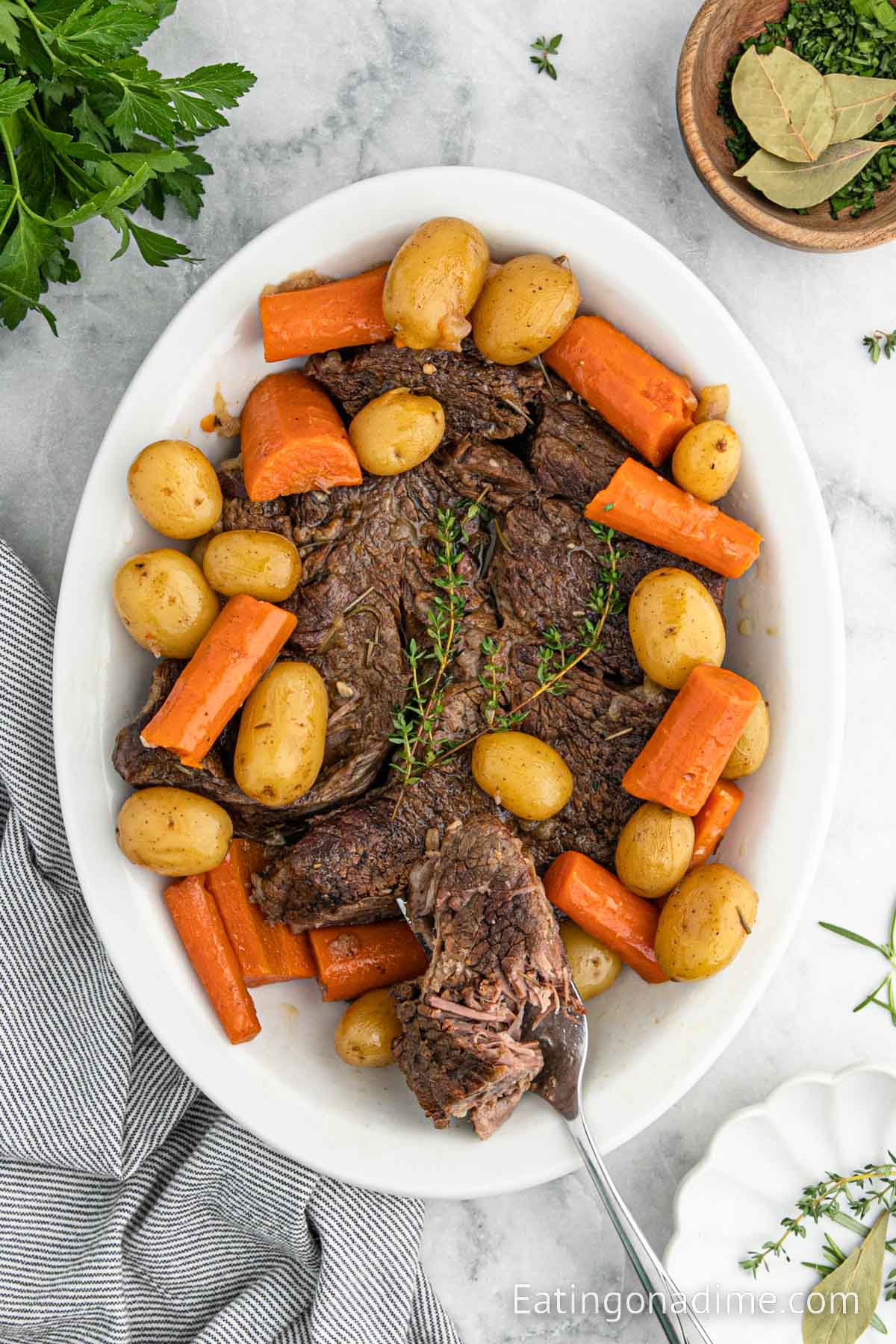
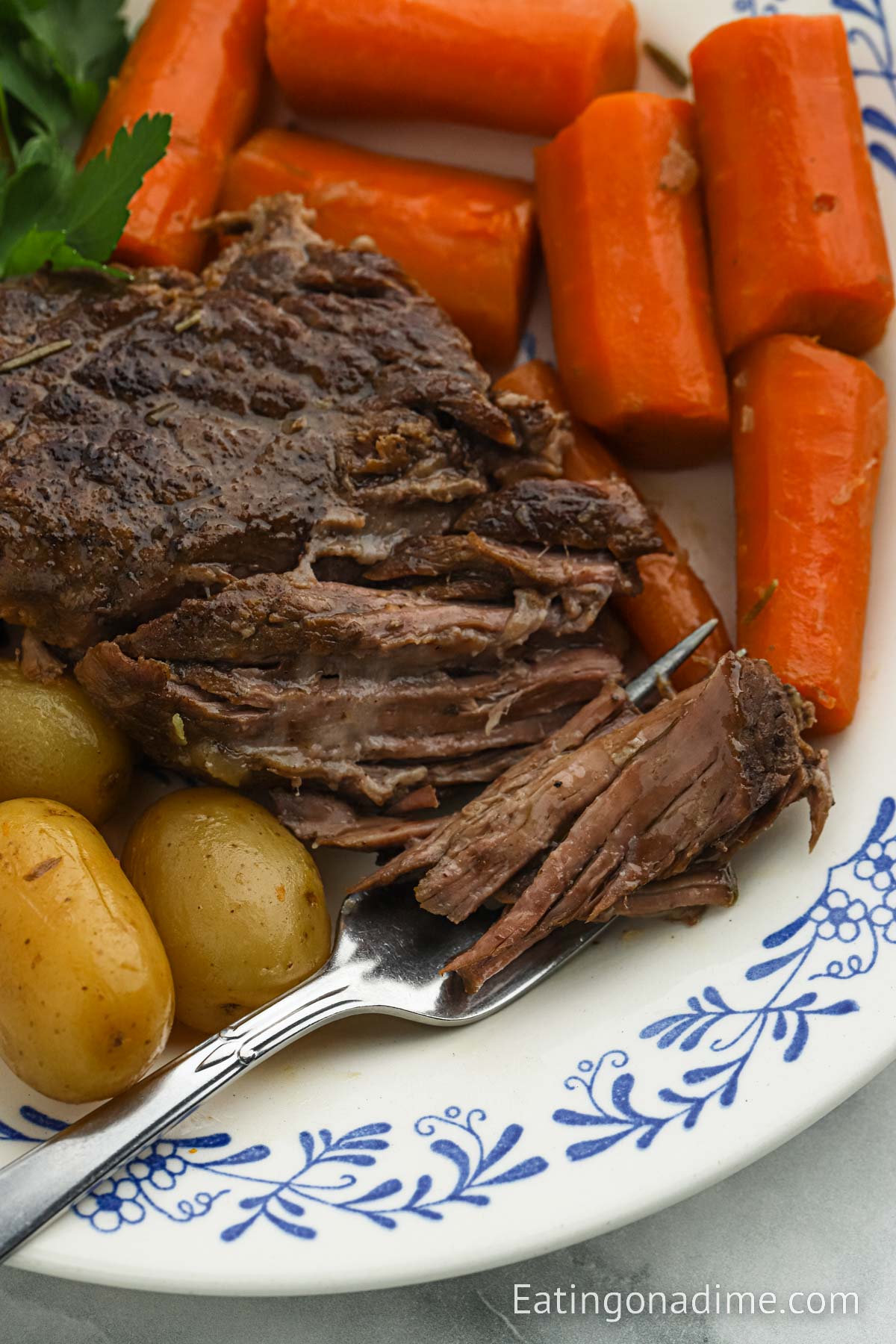
Step 5 – Serve and Enjoy – Remove from the oven. Transfer the meat and vegetables to a platter of your choice and the meal is ready to serve and enjoy.
Why Searing Is the Most Important Step
Searing the chuck roast before it goes into the oven is what separates a good pot roast from a great one. When the butter and olive oil are hot and shimmering add the roast and leave it completely undisturbed for a full 5 minutes per side. Resist the urge to move or check it — the roast will naturally release from the pan when the crust has properly formed. If you try to flip it too early it will stick and tear.
What you are looking for is a deep mahogany brown crust on all sides — not just a light gray color. That brown crust is called the Maillard reaction and it creates hundreds of new flavor compounds that infuse into the braising liquid during the long oven cook. Every rich complex bite of the finished pot roast traces back to those 10 minutes of searing at the beginning. Do not skip it and do not rush it.
Tips for Success
- Potatoes – Wait to add in the potatoes because if they cook too long they will be too soft and mushy.
- Keep Covered – While the roast is baking, keep it covered with the tight fitting lid. This allows for the heat to stay within the Dutch Oven for the best results.
- Cooking Time – Cooking time will vary based on your oven and the size of your roast.
- One Pot Meal – We love this dutch oven pot roast meal because everything cooks in the dutch oven. Feel free to cook your carrots and potatoes separately if you prefer.
- Wood Spoon – Use a wooden spoon to stir everything together to prevent scraping the cast iron dutch oven.
- Cut the veggies into large pieces – Since the beef requires a longer cook time. Cut all the vegetables into larger pieces so that they don’t get too soft while cooking.
Recipe Variation Ideas
- Cut of Beef – We recommend cooking a 3-pound roast but you can use any size or roast type. We usually use a boneless chuck roast, but you can also use a bone-in pot roast.
- Vegetables – We made this recipe with carrots and potatoes. But you can also add in celery and more. My family loves mashed potatoes, so I usually make those separately.
- Seasoning – We used simple seasoning to make this recipe. Feel free to change it to what you prefer. Add in fresh thyme or garlic cloves for added flavor.
- Thicken Gravy – If you prefer to thicken the gravy, remove the liquid and place it in a sauce pan. Mix cornstarch with water and pour this in to the liquid. Allow to simmer to serve as a gravy over your pot roast and vegetables.
- Tomato Paste – For even more depth, stir in 2 tablespoons of tomato paste along with the garlic and let it cook for about a minute before adding the broth and wine.
Serving Suggestion
- Mashed Potatoes – If you prefer you can make mashed potatoes instead of placing potatoes in the Dutch Oven. My family prefers mashed potatoes over roasted potatoes.
- Homemade Rolls – We love making homemade rolls to get the very last drop of the delicious gravy that the roast makes.
- More Roast Sides – If you are looking for more sides to serve with your pot roast recipe, we have gathered other side recipes.
Will Pot Roast get Tender the Longer it Cooks?
Yes, your pot roast will be really tender when it is done cooking. If your roast is still tough after cooking time, then it will need to cook longer.
It is also important to leave the lid on the dutch oven or crock pot while it is cooking. There is no need to stir or mess with the ingredients. This allows for the heat to stay inside the Dutch Oven to keep the meat tender.
Ways to use Leftover Pot Roast Beef
We always have leftover pot roast. So I like to use it in other ways so my family doesn’t realize they are eating leftovers. Here are some recipes that turn it into a second meal.
- Shredded Beef Enchiladas – This recipe has all the flavors of enchiladas in an easy to make casserole. It is the perfect meal to make during busy weeks because it is so simple and everyone will love it.
- Shredded Beef Sandwiches – Top your leftover shredded beef on hoagie rolls for a delicious sandwich idea. This would make a great lunch or to feed a crowd. Serve with a side of fruit salad and chips for a complete meal idea.
- Chipotle Street Steak Tacos Recipe – Add in some taco seasoning to add flavor to make these street tacos. We love making tacos with our leftovers which makes an easy weeknight meal.
Should Pot Roast be Submerged in Liquid in Dutch Oven?
Yes, while cooking the pot roast in the dutch oven, we recommend cooking in beef broth or beef stock. You can also add in other flavors such as red wine or other types of liquids.
The pot roast should submerged in about ½ of cooking liquids.
How to Store Leftovers
Refrigerate the leftovers in an airtight container for up to 5 days. We like to store in individual containers for a quick lunch the next day.
If you prefer, you can place your leftover in the freezer. We like to go ahead and shred the pot roast and place in a freezer safe container. If stored properly, your shredded beef will last about 3 months.
Frequently Asked Questions
We like making a chuck roast in the dutch oven. But you can also use a brisket or a round roast. The chuck roast cooks tender and I always try to buy one with great marbling. This allows for the best flavor.
We always have cooked our pot roast in the slow cooker because of the convenience. But cooking the pot roast in the dutch oven is just as easy and we think it just tastes better. Because of the cast iron, it distributes the heat and evenly cooks the pot roast. We also think it comes out full of juice and flavor.
For a 3-pound chuck roast we recommend a 7 to 8 quart Dutch oven — large enough to fit the roast comfortably with room for the vegetables and enough liquid without crowding. A Dutch oven that is too small will not allow proper searing and the liquid will overflow during baking. Cast iron Dutch ovens distribute heat most evenly for the best pot roast result.
At 300°F this pot roast takes approximately 3½ to 4 hours total — 1½ hours covered before adding the potatoes then an additional 2 to 2½ hours until the meat and vegetables are completely fork tender. Cooking time will vary slightly based on the size of your roast and your specific oven.
We cook this pot roast at 300°F rather than 325°F or 350°F — the lower temperature allows the tough connective tissue in the chuck roast to break down slowly over the long cook time resulting in meat that falls apart completely rather than becoming dry or stringy. Higher temperatures cook the roast faster but the meat will not be as tender or juicy as low and slow at 300°F.
Substitute the red wine with an equal amount of additional beef broth for a completely alcohol-free version that still gives you a rich deeply flavored braising liquid. Beef stock gives an even richer result than regular beef broth if you have it on hand.
No — the potatoes will just cook longer and turn out softer and more broken down than intended, which actually helps thicken the gravy. It’s a different texture, not a failed dish.
More Easy Roast Recipes
Dutch Oven Pot Roast
Ingredients
- 3 pounds Beef Chuck Roast
- 2 teaspoon Salt
- 1 teaspoon Black Pepper
- 1 Tablespoon Butter
- 2 Tablespoons Olive Oil
- 1 Yellow Onion sliced
- 4 Carrots peeled and cut into 2 inch pieces
- 1 Tablespoons Minced Garlic
- 2 cups Beef Broth
- 1 cup Red Wine
- 2 teaspoons Worcestershire Sauce
- ½ teaspoon Dried Rosemary
- 2 Bay Leaves
- 1 ½ pounds Baby Yellow Potatoes
See how we calculate recipe costs.
Instructions
- Preheat the oven to 300 degrees Fahrenheit.
- Season the roast with salt and pepper on all sides of the roast.
- Heat the butter and olive oil in a large dutch oven over medium high heat. Brown the meat on both sides (approximately 5 minutes per side) in the dutch oven. Remove the roast from the pan to a separate plate.
- Reduce the heat to medium and stir in 1 cup of the beef broth. Bring the broth to a low simmer and scrape the brown bits off the bottom and the sides of the pan.
- Stir in the onions and carrots. Sauté for 5-7 minutes until the onions are translucent. Then stir in the garlic and cook for 1 minute until aromatic.
- Place the roast back into the pan on top of the vegetables. Add in the remaining beef broth, red wine, Worcestershire sauce, rosemary and bay leaves.
- Cover with a lid and bake for 1 ½ hours.
- Then add the baby potatoes to the dutch oven. Cover and cook for 2-2 ½ more hours until the meat and vegetables are fork tender.
- Remove from the oven. Transfer the meat and vegetables to a platter of your choice and the meal is ready to serve and enjoy!