
This post may contain affiliate links. If you make a purchase through links on our site, we may earn a commission.
If you’ve ever wanted soft, bakery-style buns without the bakery price, this Brioche Bun Recipe is for you. These homemade yeast buns are made with simple pantry ingredients, feed a crowd, and freeze beautifully for later.
They’re perfect for burgers, sandwiches, or dinner rolls. Proof that from-scratch baking can still be affordable and doable for real life.
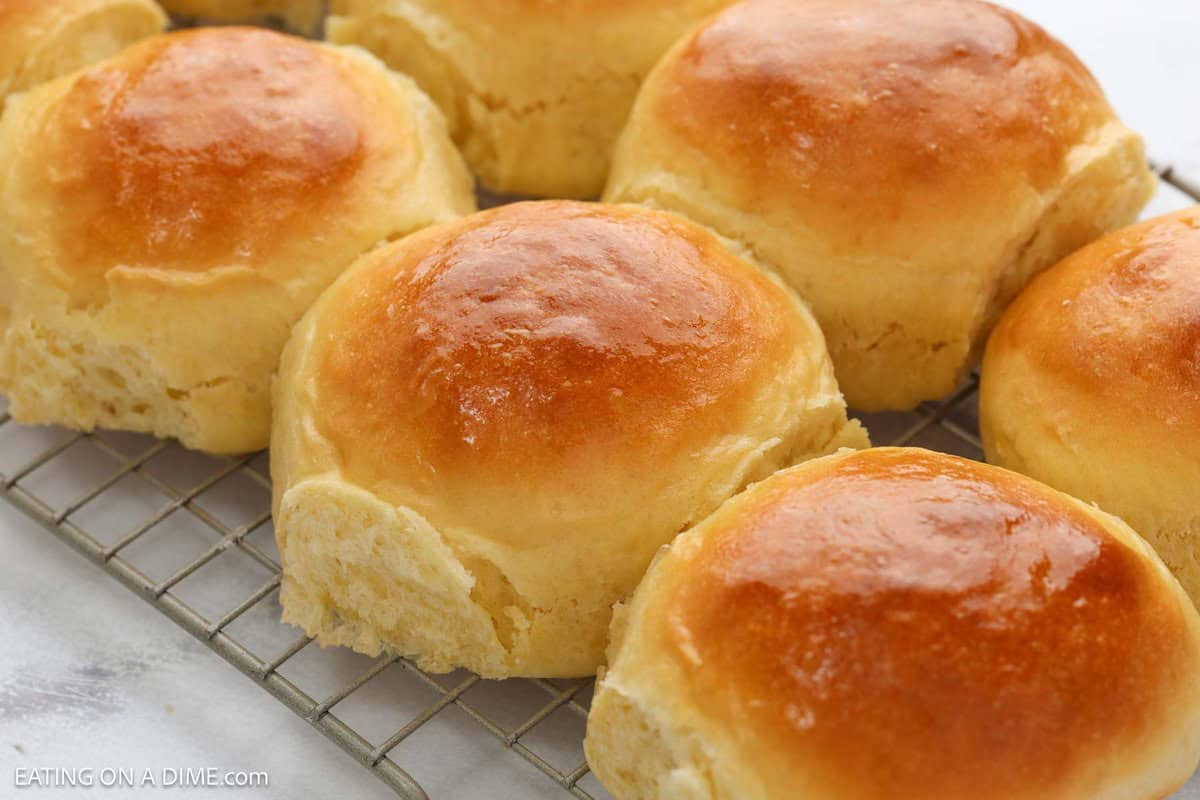
Why You’ll Love this Brioche Bun Recipe!

This is one of those recipes I come back to again and again because it just works. When I want something homemade that feels special but doesn’t blow the grocery budget, these buns are my go-to.
I’ve made them for family dinners, cookouts, and even freezer prep for busy weeks, and they always turn out soft, fluffy, and crowd-pleasing. If you’ve ever felt intimidated by yeast bread, I hope this recipe gives you the confidence to try — it’s simpler than it looks and so worth it.
If you love making homemade bread recipes, you may want to try my Homemade English Muffins, Slow Cooker Dinner Rolls or our Homemade Pita Bread.
Recipe Snapshot
- Prep Time: 30 minutes
- Rise Time: 2 hours
- Bake Time: 25 minutes
- Servings: 18 buns
- Budget-Friendly: Yes
- Make-Ahead Friendly: Yes
- Freezer-Friendly: Yes
Ingredients

- Whole Milk – Whole milk creates a richer, softer bun. Lower-fat milk will work but produce slightly less tender results.
- Sugar – Adds a hint of sweetness
- Active Dry Yeast – Make sure the milk is warm (not hot). If the yeast doesn’t foam after 10 minutes, it may be inactive. We recommend using fresh yeast for the best results and therefore make your dough rise.
- All-Purpose Flour – Base of the bread
- Eggs – Room-temperature eggs incorporate more smoothly into the dough.
- Butter – Melted butter adds richness; let it cool slightly before adding to avoid scrambling the eggs.
How to Make Brioche Bun

Step 1 – In a large bowl or stand mixer with paddle attachment, combine the warm milk, yeast, sugar, and 2 cups of flour. Whisk until smooth. Cover with a towel and set aside in a warm place for 30 minutes. After 10 minutes, the mixture should look foamy. If it doesn’t, the yeast may be expired.

Step 2 – In a separate bowl, whisk the eggs. Add the eggs, salt, and melted butter to the yeast mixture. Make sure to scrape the sides of the bowl.

Step 3 – Gradually mix in the remaining flour in small portions, adding extra flour if needed to form a soft, slightly sticky dough.

Step 4 – Knead the dough by hand or with a stand mixer for 10–15 minutes until elastic.

Step 5 – Cover and let rise in a warm place for 1 hour. The dough should be smooth, elastic, and slightly tacky but not sticky.

Step 6 – Divide the dough into 18 pieces. Flatten each dough balls into a round shape.

Step 7 – Place the buns on a parchment paper baking sheet, cover with a towel, and let rise for 30 minutes.

Step 8 – Whisk together the egg and water for the topping.

Step 9 – Brush the tops of the buns with the egg wash mixture. Preheat the oven to 350°F. Bake the buns for approximately 25 minutes, or until golden
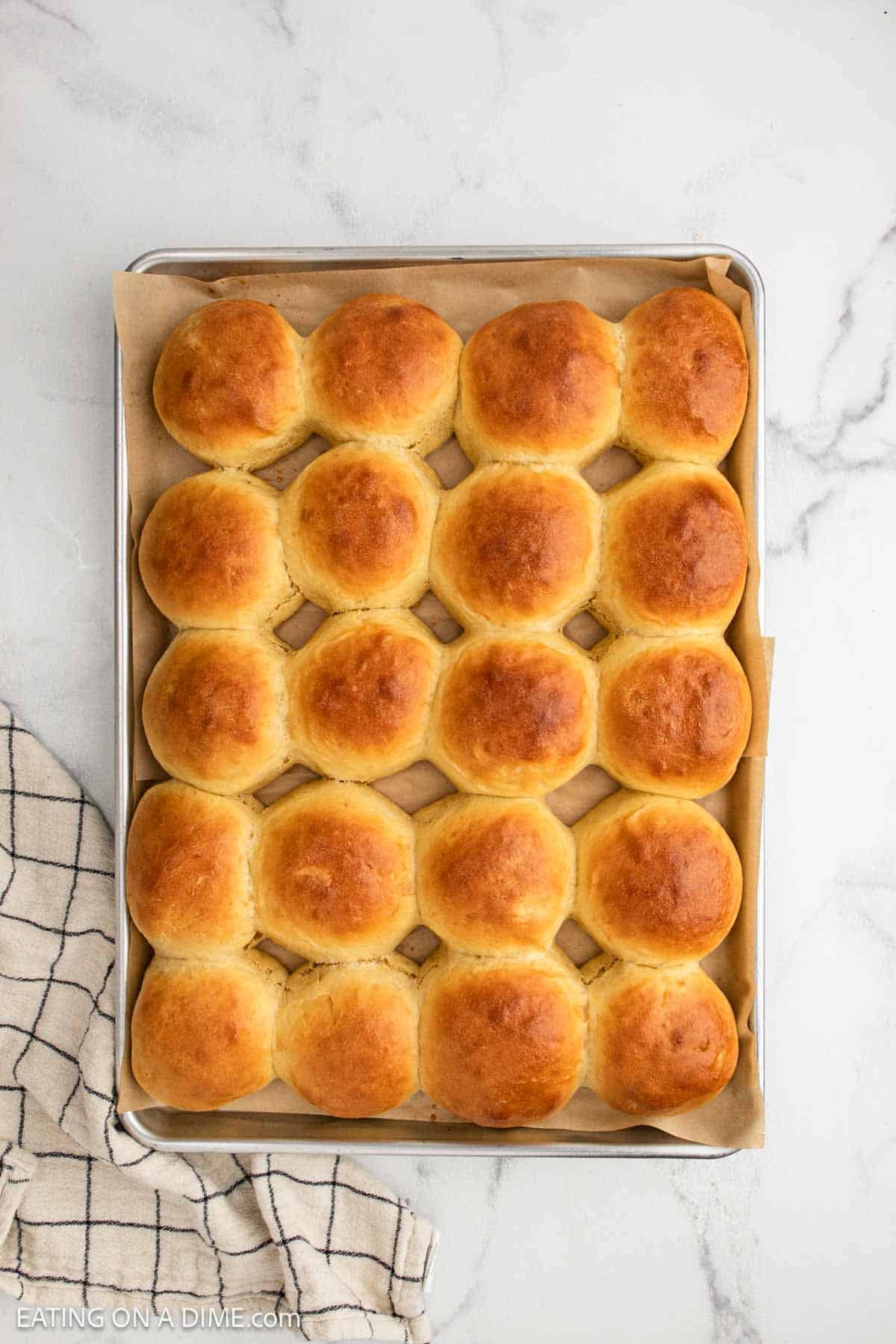
Step 10 – Remove from the oven and allow the buns to cool slightly on the baking sheet before transferring to a wire rack. The buns should be golden brown and sound hollow when tapped on the bottom.

Tips for Success
- Flour Amount – Depending on the brand of flour, you may need up to 7 cups instead of 6. Add gradually until the dough is soft but not dry.
- Dough Texture – The dough should be slightly sticky; too much flour will make dense buns.
- Rising Environment – Use a warm, draft-free area for rising.
- Shaping – Adjust the size of the buns; smaller buns bake faster, larger buns may need extra time.
- Brushing the Tops – For extra shine, you can brush with egg yolk mixed with a teaspoon of milk instead of whole egg + water.
Variations & Substitutions
- Richer Dough – Replace ¼ cup of milk with heavy cream for a richer dough.
- Whole Wheat – Replace 2 cups all-purpose flour with whole wheat flour/
- Garlic and Herb Rolls – Add 1–2 tsp dried Italian herbs such as oregano and basil to the dough. Brush tops with garlic herb butter before/after baking.
- Honey Butter Sweet Buns – Add 3–4 tbsp pure honey to the dough. Brush with honey-butter glaze after baking.
- Sesame Seeds – Feel free to sprinkle the dough with sesame for even more flavor. This is great if making to serve as hamburger buns.
Storage & Freezer Instructions
- Room Temperature – Store cooled buns in an airtight container at room temperature for up to 3 days.
- Freezer – Freeze buns fully cooled in a freezer-safe bag for up to 3 months. Thaw at room temperature or warm in the oven at 300°F for 5–7 minutes.

How to Serve Brioche Bun
We love to use the Homemade buns when making Butter Burgers and replace store bought burger buns. They are great to use when making sandwiches, Manwich Sloppy Joes or Ham and Turkey Sliders.
They also make a great addition to your holiday meal because they are perfect to make-ahead and perfect for feed a crowd on a budget. Serve with Whipped Butter and Raspberry Freezer Jam.
FAQs
This is usually caused by inactive yeast or liquid that was too hot or too cold. Make sure your milk is around 110°F and that your yeast is fresh. Also allow the dough to rise in a warm, draft-free area.
Yes! You can prepare the dough, shape the buns, and refrigerate them overnight. Let them sit at room temperature for about 30–45 minutes before baking the next day.
A slightly sticky dough is normal and helps keep buns soft. If the dough is overly wet, add flour 1 tablespoon at a time until it’s workable but still soft.
Yes. You can substitute instant yeast at a 1:1 ratio, and you can skip the initial proofing step. Just mix it directly into the dry ingredients.
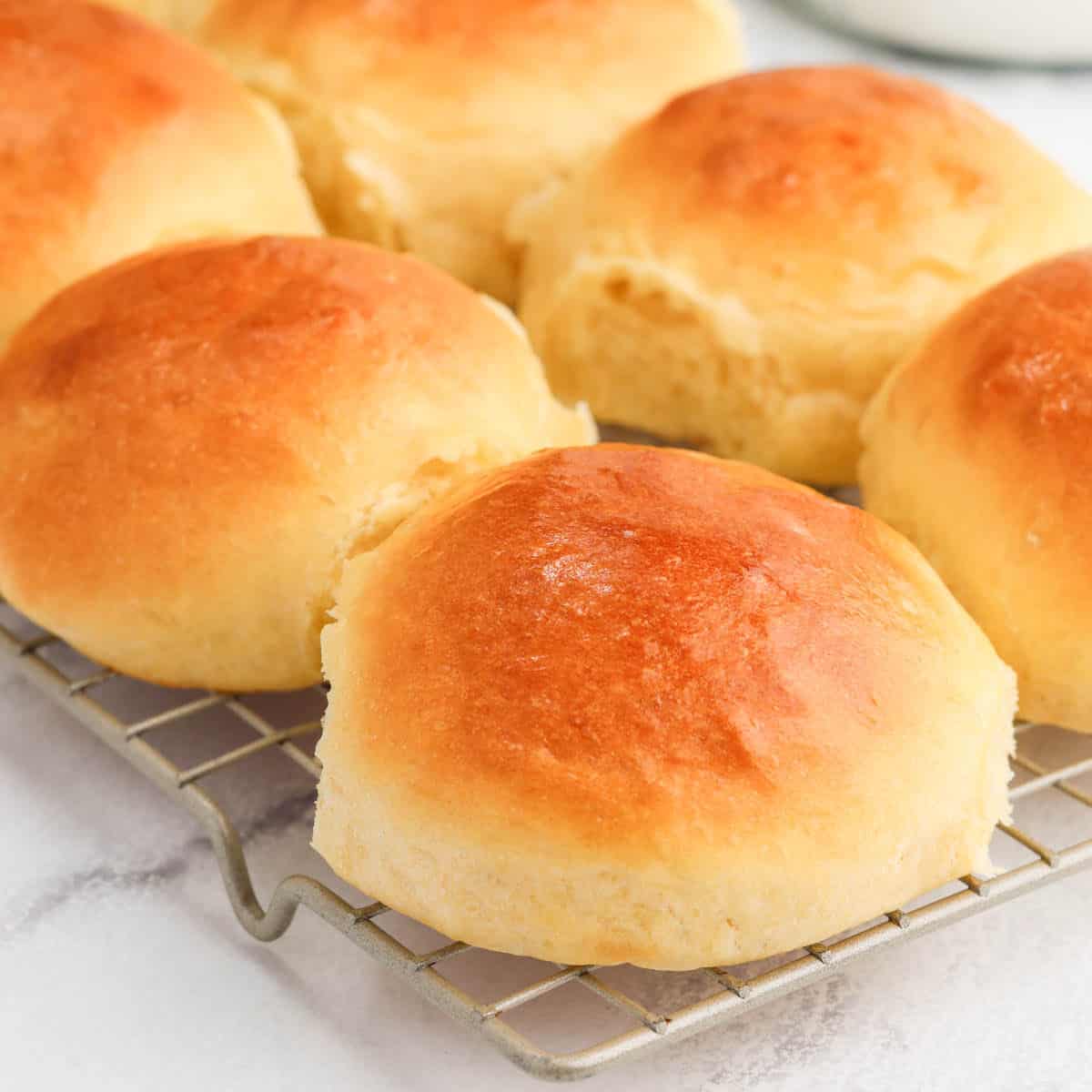
Brioche Bun
Ingredients
- 2 cups whole milk heated to 110°F
- ½ cup granulated sugar
- 1 ½ tbsp active dry yeast
- 6 cups all-purpose flour See note – You may need up to 7 cups
- 6 eggs
- 1¾ sticks unsalted butter melted
- ⅛ tsp salt
For the Topping:
- 1 egg
- 3 tbsp water
Instructions
- In a large mixing bowl or stand mixer, combine the warm milk, yeast, sugar, and 2 cups of flour. Whisk until smooth. Cover with a towel and set aside in a warm place for 30 minutes.
- In a separate bowl, whisk the eggs. Add the eggs, salt, and melted butter to the yeast mixture.
- Gradually mix in the remaining flour in small portions, adding extra flour if needed to form a soft, slightly sticky dough.
- Knead the dough by hand or with a stand mixer for 10–15 minutes until elastic.
- Cover and let rise in a warm place for 1 hour.
- Divide the dough into 18 pieces. Flatten each piece into a round shape.
- Place the buns on a parchment-lined baking sheet, cover with a towel, and let rise for 30 minutes.
- Whisk together the egg and water for the topping. Brush the tops of the buns with this mixture.
- Preheat the oven to 350°F. Bake the buns for approximately 25 minutes, or until golden
- Remove from the oven and allow the buns to cool slightly on the baking sheet before transferring to a wire rack.
Recipe Notes
Nutrition Facts
More Easy Homemade Bread Recipes

If you make this Brioche Bun Recipe, please leave us a comment or a star review. We love hearing from you!




We love these Brioche Buns! We used them to make sandwiches this weekend and my entire family loved them.